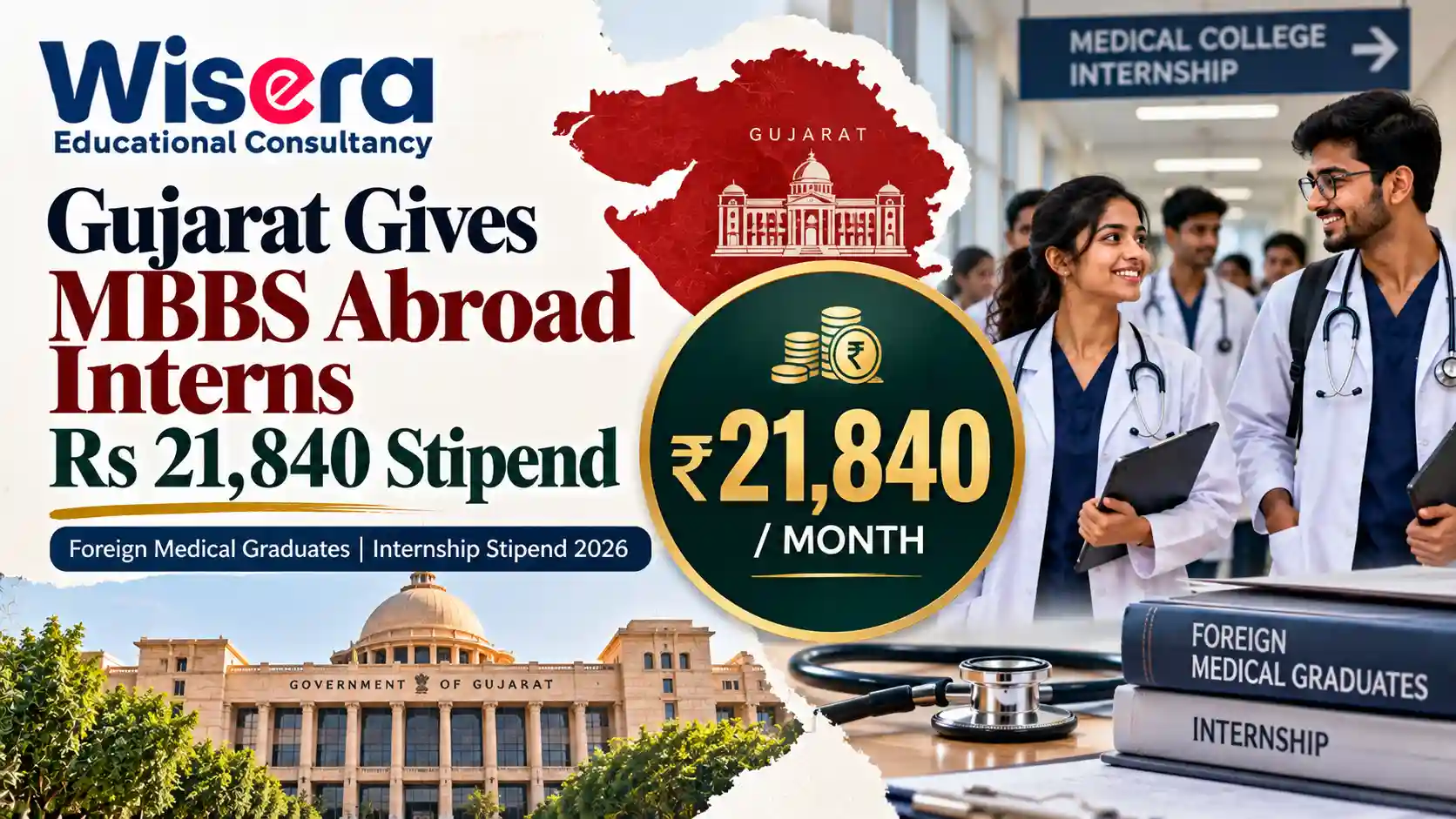





Gujarat Gives MBBS Abroad Interns Rs 21,840 Stipend
In a significant move for medical graduates who pursued their degrees overseas, the Gujarat government has announced a monthly MBBS interns stipend Gujarat program worth Rs 21,840 for interns who completed their MBBS education abroad. The decision, announced in Gandhinagar on October 5, is expected to benefit around 350 doctors currently undergoing their mandatory internship in the state. This move brings parity between India-trained and abroad-trained medical graduates, ensuring that all interns receive fair compensation while they complete their clinical training requirements.
The announcement was reported by Daily Excelsior, which highlighted that this policy shift addresses a long-standing demand from medical graduates who studied in countries like Russia, Ukraine, China, the Philippines, and other popular MBBS-abroad destinations.
Why This Stipend Matters for MBBS Abroad Graduates
Students who pursue MBBS abroad must complete a mandatory internship in India after clearing the Foreign Medical Graduate Examination (FMGE) or the National Exit Test (NExT), as applicable. This internship period is crucial for gaining hands-on clinical experience under the Indian healthcare system before they can practice independently.
Until now, many interns who studied abroad faced financial strain during this unpaid or underpaid internship phase. The new stipend aims to reduce this burden and provide much-needed financial support, similar to what India-trained MBBS graduates typically receive during their internships.
Key Highlights of the Gujarat Stipend Announcement
-
Monthly stipend amount: Rs 21,840
-
Beneficiaries: Approximately 350 MBBS interns who studied abroad
-
Eligibility: Interns completing mandatory clinical training in Gujarat
-
Objective: Financial parity with domestically trained medical interns
-
Announced from: Gandhinagar, Gujarat
This stipend is a welcome relief for families who have already invested significant amounts in sending their children abroad for medical education. With rising costs of MBBS programs in India due to limited seats, many students opt for countries offering affordable medical degrees, only to return and complete a rigorous licensing and internship process.
Impact on Students Planning MBBS Abroad
This policy change could influence the decisions of thousands of aspiring doctors across India who are weighing the pros and cons of studying medicine abroad. Financial support during the internship period removes one more obstacle in the path of foreign medical graduates, making the overall MBBS abroad journey more sustainable.
Prospective students should keep track of state-wise policies like this one, as financial support structures can vary significantly from state to state. While Gujarat’s initiative is commendable, students should also consider the following when planning their medical education abroad:
-
Recognition of the foreign medical university by the National Medical Commission (NMC)
-
Requirements for FMGE/NExT clearance upon return
-
State-specific internship stipend policies
-
Duration and structure of mandatory internship programs
-
Cost of living and tuition in the destination country
WISERA COUNSELLING DESK
Not sure which university matches your NEET score?
Get a free comparison call on NMC-approved options within your budget.
A Step Toward Supporting Foreign Medical Graduates
Gujarat’s decision reflects a growing recognition of the challenges faced by foreign medical graduates (FMGs) as they transition back into India’s healthcare workforce. Other states may follow suit, especially given the increasing number of students choosing to study MBBS abroad due to limited seats and high costs of private medical colleges in India.
This stipend could also encourage more interns to complete their internship in Gujarat rather than other states, potentially boosting the local healthcare workforce with well-trained medical professionals.
Conclusion
The Gujarat government’s announcement of a Rs 21,840 monthly stipend for MBBS interns who studied abroad marks a positive step toward supporting foreign medical graduates during their critical internship phase. With around 350 doctors set to benefit, this move not only eases financial pressure but also sets a potential precedent for other states to consider similar support systems. As more Indian students pursue medical degrees abroad, policies like this will play an important role in ensuring a smoother transition into India’s healthcare system.
Comments are closed