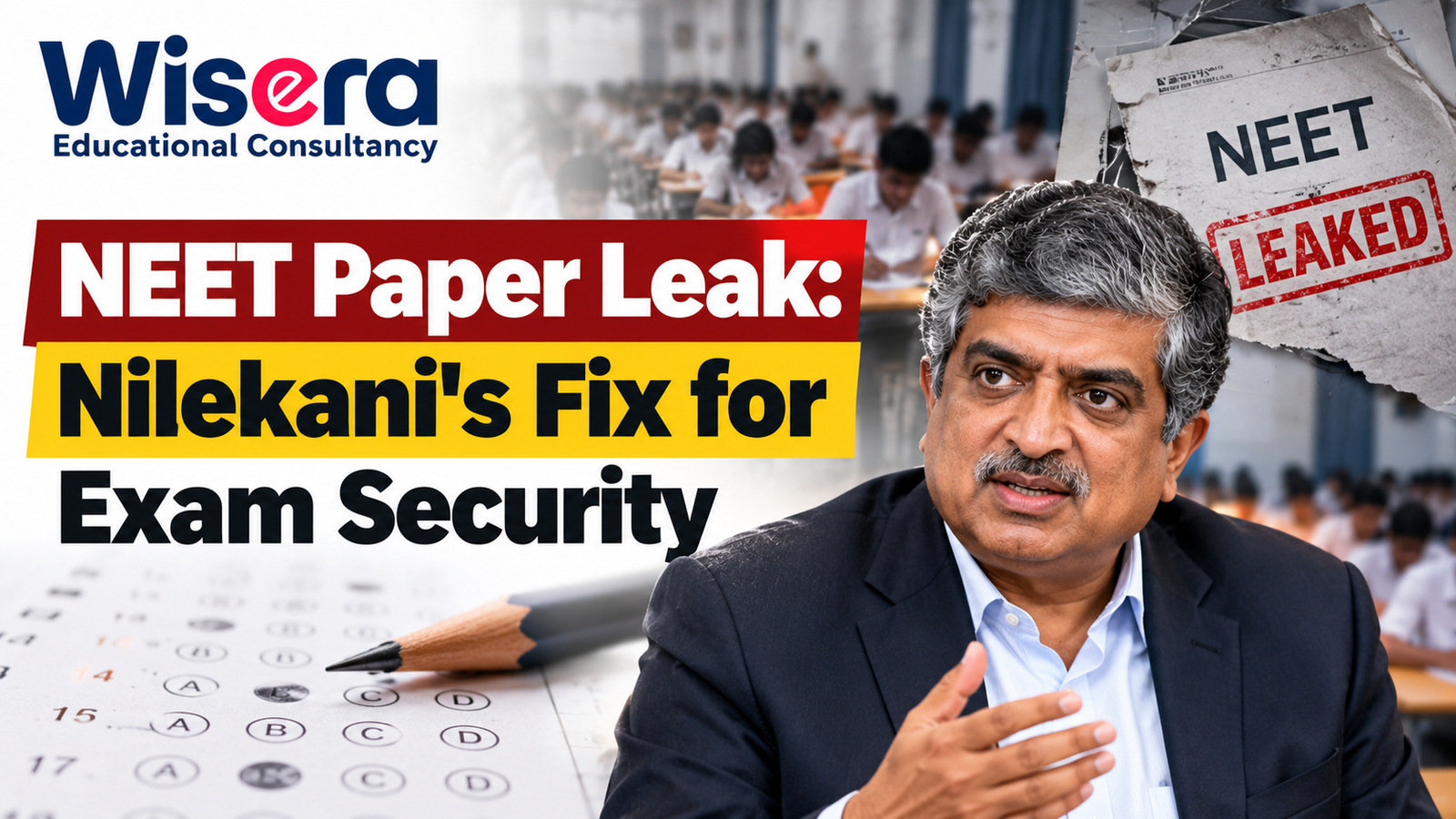





NEET Paper Leak: Nilekani's Fix for Exam Security
The recurring problem of the NEET paper leak has once again taken centre stage, with technology veteran Nandan Nilekani proposing a fresh approach to secure examination integrity. Nilekani suggested that creating question papers at the last minute, rather than well in advance, could significantly reduce the incentive for leaks to occur in the first place. His remarks come at a time when the National Eligibility cum Entrance Test continues to face scrutiny following a major paper leak controversy.
According to a report by Hindustan Times, the Central Bureau of Investigation had already filed its first charge sheet in a Delhi court back in May, tied to the NEET-UG 2026 paper leak case. This development has reignited conversations around how India’s largest medical entrance examination can be made more secure for the millions of students who appear for it every year.
WISERA COUNSELLING DESK
Not sure which university matches your NEET score?
Get a free comparison call on NMC-approved options within your budget.
What Nandan Nilekani Proposed
Nilekani, known for his pioneering work with Aadhaar and digital public infrastructure, argued that one of the simplest ways to prevent leaks is to shorten the window between question paper creation and the actual exam. His logic is straightforward: the longer a paper sits finalized before the test date, the more opportunities exist for it to be compromised, photographed, or sold.
By generating papers closer to the exam time, using secure digital systems, the number of people and touchpoints involved in handling sensitive material can be drastically reduced. This, according to Nilekani, removes much of the “incentive to leak” since there simply isn’t enough time for leaked content to circulate meaningfully before the exam begins.
Why This Matters for NEET Aspirants
For lakhs of students preparing for NEET every year, exam integrity isn’t just a procedural matter — it directly affects their futures. A leaked paper can lead to:
- Exam cancellations and re-tests, causing massive stress and schedule disruptions
- Loss of trust in the merit-based admission process
- Legal battles and prolonged uncertainty over results
- Unfair advantage to those with access to leaked material
- Delayed academic sessions for genuine, hardworking students
The NEET-UG 2026 case, which is still under CBI investigation, has already shown how deeply damaging a security breach can be, affecting not just individual students but the credibility of the entire examination system.
The Role of Technology in Exam Security
Nilekani’s suggestion ties into a broader conversation about leveraging technology, including AI-driven systems, to safeguard high-stakes examinations like NEET, JEE, CUET, and NET. Digital infrastructure can help in several ways:
- Encrypted, on-demand question paper generation closer to exam dates
- Real-time tracking of document access and movement
- Reduced manual handling of printed papers
- Automated alerts for unusual access patterns
Union Education Minister Dharmendra Pradhan and other stakeholders have also weighed in on strengthening exam processes, especially after student protests following previous leak incidents demanded accountability and systemic reform.
CBI Investigation and the NEET-UG 2026 Case
The charge sheet filed by the CBI in May marks a significant step in addressing the paper leak controversy. While investigations are ongoing, the case has underscored the urgent need for structural changes in how sensitive exam materials are created, stored, and transported before being administered to students across the country.
Authorities are now expected to examine suggestions like Nilekani’s more closely as part of a long-term strategy to prevent future incidents, particularly given the scale at which NEET is conducted nationwide.
Looking Ahead for Students
For students currently preparing for NEET, staying updated on exam security reforms is just as important as academic preparation. Reliable resources and guidance can help aspirants navigate these changes with confidence. Platforms like Wisera continue to support students by providing updated information and preparation support as the examination landscape evolves.
In conclusion, Nandan Nilekani’s proposal to create question papers at the last minute offers a practical, technology-driven solution to a persistent problem. As the CBI continues its probe into the NEET-UG 2026 paper leak case, such reforms could play a crucial role in restoring trust and ensuring a fairer, more secure examination process for future NEET aspirants.
Frequently Asked Questions
Is MBBS without NEET actually possible for Indian students?
Admission without NEET is possible at some foreign universities, but NEET-UG qualification is still mandatory for the Eligibility Certificate Indian students need, and for later registration in India.
Can I skip NEET if I plan to practise only outside India?
Technically, yes, since NMC registration wouldn’t apply. In practice, most students later prefer keeping the option to work in India open, which requires NEET qualification from the start.
Does a WDOMS listing mean a university is NMC-approved?
No. WDOMS confirms the school is a recognised medical institution globally. NMC compliance is a separate check covering duration, language, and internship rules.
Is FMGE still required in 2026, or has NExT replaced it?
FMGE is still the active licensing exam. NExT’s rollout has been delayed again under the NMC’s latest draft regulations, with no confirmed implementation date.
How long does the full process take, from admission to Indian licence?
Typically six years or more: a 54-month-plus course with internship abroad, followed by FMGE preparation and clearance after returning to India.
What’s the safest first step before shortlisting a university?
Get your NEET-UG status and Eligibility Certificate confirmed, then verify any shortlisted university on WDOMS before discussing fees.
Related Categories
- No related categories found.
Comments are closed