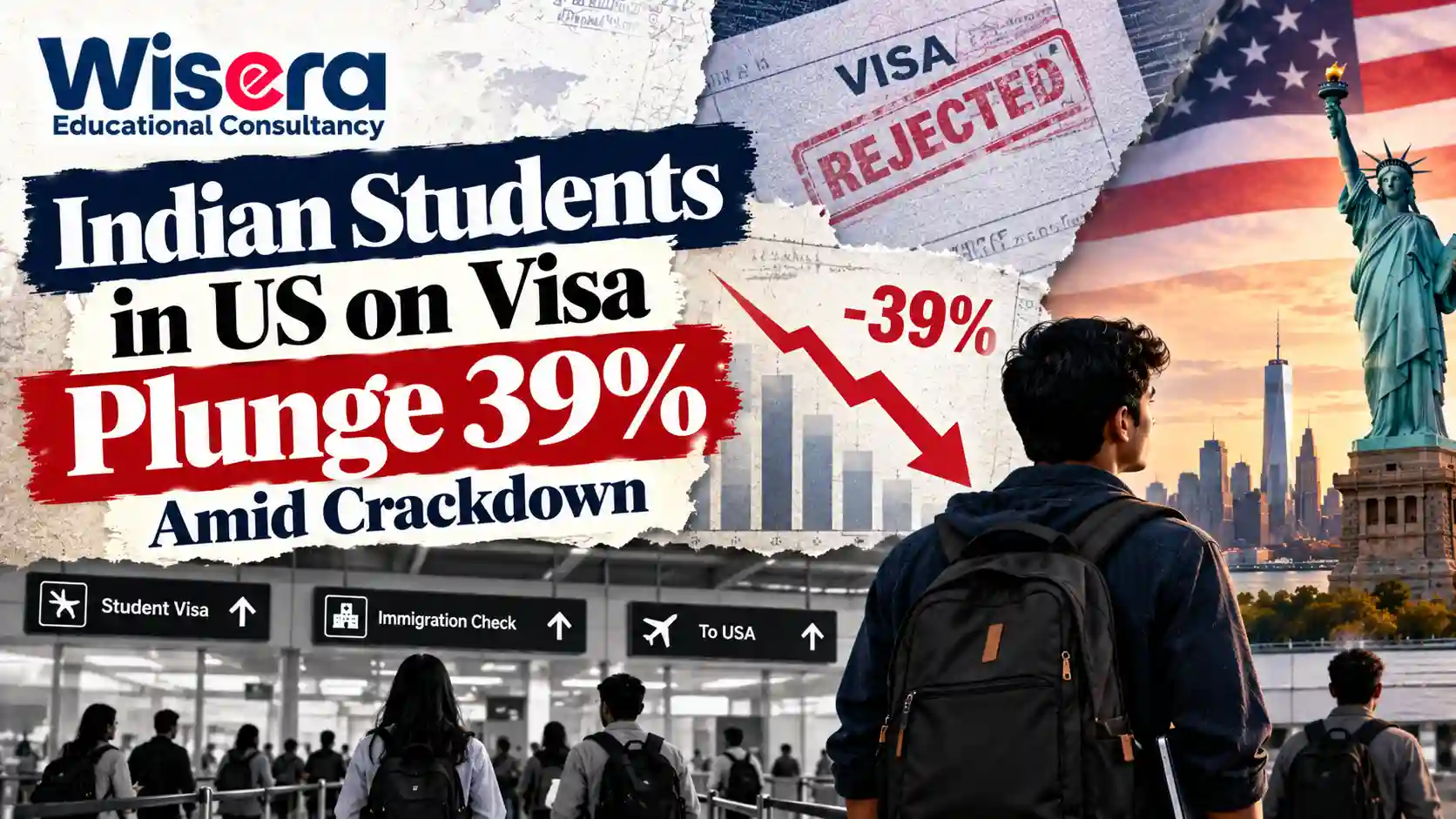





Indian Students in US on Visa Plunge 39% Amid Crackdown
The number of Indian students in US on visa arrivals has dropped sharply by 39%, according to a recent report, as a wider immigration crackdown reshapes the study-abroad landscape. Study-abroad consultants point to visa appointment delays, stricter screening, and growing uncertainty over post-study work opportunities as key reasons behind this steep decline. For thousands of Indian students who see the United States as a top destination for higher education, this shift raises serious questions about future plans and alternative pathways.
This development, first reported by a renowned news provider, highlights a growing trend of hesitation among Indian students and their families when it comes to choosing the US as a study destination. Let’s break down what’s happening, why it matters, and what students can do next.
WISERA COUNSELLING DESK
Not sure which university matches your NEET score?
Get a free comparison call on NMC-approved options within your budget.
Why Indian Student Arrivals in the US Are Falling
The 39% plunge isn’t happening in isolation. It reflects a combination of policy-level and procedural changes that have made the US visa process more complicated for Indian applicants. Some of the most cited reasons include:
- Visa appointment delays: Long wait times at US consulates in India have made it difficult for students to secure interview slots in time for their academic sessions.
- Stricter screening procedures: Enhanced background checks and more rigorous documentation requirements have slowed down approvals.
- Uncertainty over OPT and post-study work: Concerns about changes to Optional Practical Training (OPT) policies have made students wary of investing heavily in a US education without guaranteed work opportunities afterward.
- Broader immigration crackdown: Tighter enforcement and policy shifts under the current administration have created a general climate of unpredictability for international students.
Together, these factors have discouraged many prospective students from pursuing US admissions this cycle, even after receiving offer letters from American universities.
Impact on Indian Students and Families
For many Indian families, studying in the US represents a significant financial and emotional investment. When visa processes become unpredictable, it directly affects planning around tuition payments, accommodation bookings, and academic timelines.
Study-abroad consultants report that an increasing number of students are now either delaying their US plans by a semester or exploring alternative destinations altogether. This hesitation is particularly notable among STEM and graduate-level applicants, who typically rely on post-study work options to recover the cost of their education.
Are Students Looking at Alternative Destinations?
With growing uncertainty surrounding US visas, many Indian students are now considering other English-speaking countries with more stable immigration policies. Popular alternatives include:
- Canada
- United Kingdom
- Australia
- Germany and other European countries with affordable, English-taught programs
These destinations often offer clearer post-study work pathways and comparatively smoother visa processes, making them attractive options for students who want certainty in their academic and career planning. If you’re currently weighing your options, it may help to consult trusted study abroad guidance resources to compare destinations based on your field of study, budget, and long-term career goals.
What This Means for Future Applicants
If you’re planning to apply to US universities in the coming intake cycles, it’s important to factor in these new realities. Here are a few practical steps to consider:
- Apply early and start the visa process well in advance of your intended departure date.
- Keep all documentation thorough and updated to avoid delays during screening.
- Stay informed about OPT and post-study work policy updates through official university and government channels.
- Have a backup plan, including alternative universities or countries, in case of visa delays.
- Work with experienced study-abroad counselors who track real-time visa trends and processing times.
While the US remains a globally respected education hub, students today need to be more strategic and flexible than ever before when planning their international education journey.
Conclusion
The 39% drop in Indian students in US on visa arrivals signals a pivotal moment for study-abroad planning. While the reasons behind this decline are rooted in policy and procedural challenges, the takeaway for students is clear: preparation, flexibility, and staying informed are more critical than ever. Whether you choose to pursue the US or explore other destinations, making informed decisions early can help you stay ahead amid shifting immigration landscapes.
Frequently Asked Questions
Why have Indian student arrivals in the US dropped by 39%?
The decline is linked to visa appointment delays, stricter screening processes, and uncertainty around post-study work opportunities like OPT.
Is it still safe to apply for a US student visa right now?
Yes, applications are still being processed, but students should expect longer wait times and should apply well ahead of their intended intake.
What is OPT and why does it matter to Indian students?
OPT (Optional Practical Training) allows international students to work in the US after graduation. Uncertainty around this program affects the overall value proposition of studying in the US.
Which countries are Indian students considering instead of the US?
Canada, the UK, Australia, and parts of Europe are emerging as popular alternatives due to more predictable visa and post-study work policies.
How can students minimize visa-related risks?
Applying early, maintaining complete documentation, staying updated on policy changes, and having backup options can help reduce risks related to visa delays or denials.
Comments are closed