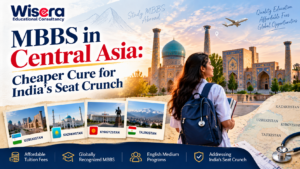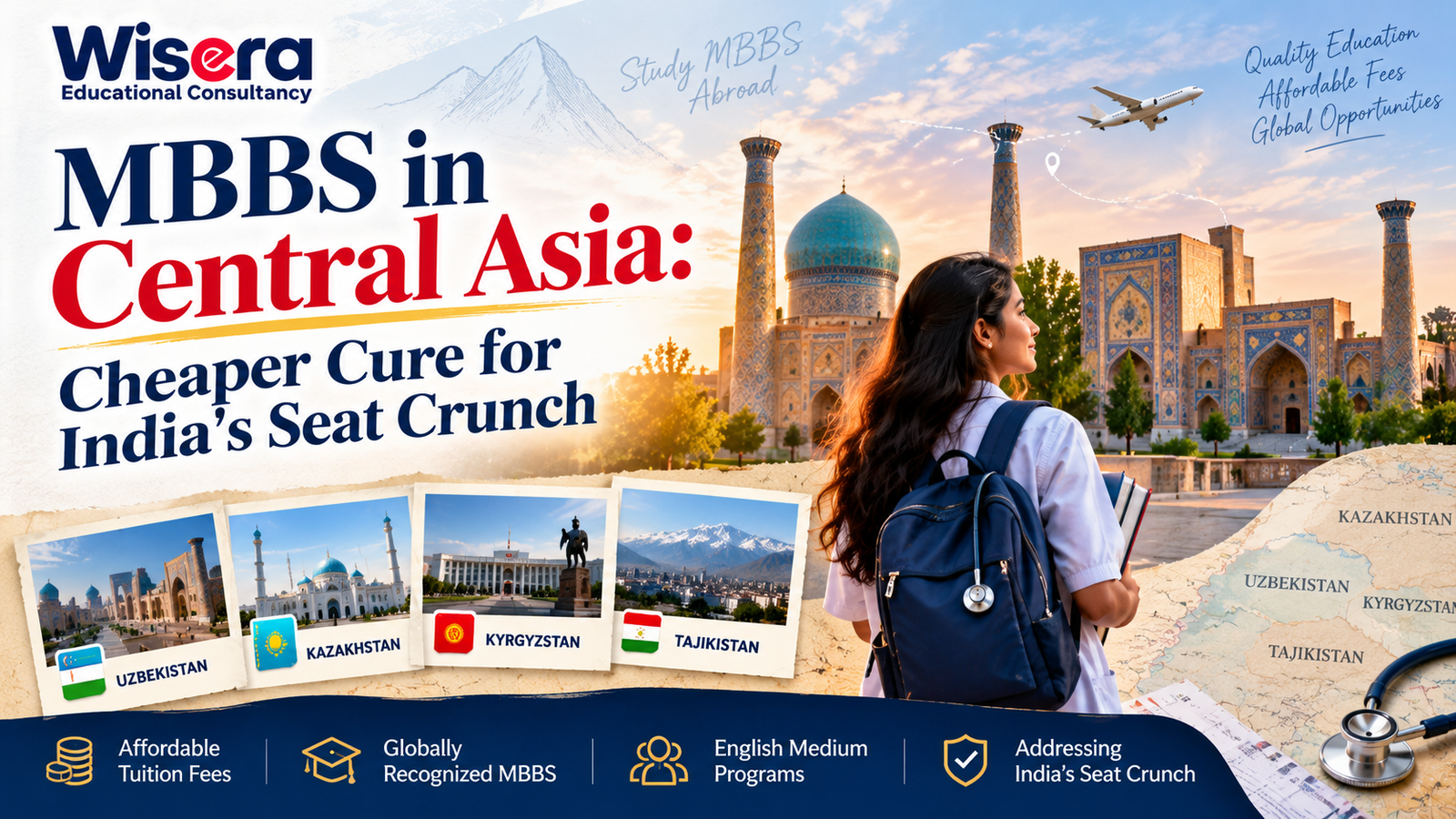



MBBS in Central Asia: Cheaper Cure for India's Seat Crunch
Every year, lakhs of Indian students compete for a limited number of MBBS seats back home, pushing many to look overseas for medical education. Lately, a new trend is emerging: MBBS in Central Asia is fast becoming the preferred alternative to traditional destinations like Russia, Ukraine, and the Philippines. Countries such as Kazakhstan, Kyrgyzstan, Uzbekistan, and Tajikistan are drawing Indian aspirants with lower fees, simpler admission processes, and globally recognized degrees.
According to a recent report by Business Standard, Indian students are increasingly exploring destinations beyond the usual markets as domestic seat shortages and skyrocketing private college fees continue to push the cost of a medical degree out of reach for many middle-class families.
WISERA COUNSELLING DESK
Not sure which university matches your NEET score?
Get a free comparison call on NMC-approved options within your budget.
Why Central Asia Is Gaining Popularity
The appeal of Central Asian medical universities lies in a combination of affordability, quality infrastructure, and recognition by major global medical councils. Unlike India, where private medical college fees can run into crores of rupees, universities in this region charge a fraction of that amount for the full MBBS course.
Some of the key reasons driving this shift include:
- Lower tuition fees compared to India and other popular study-abroad destinations
- Recognition by the National Medical Commission (NMC) and the World Health Organization (WHO)
- English-medium teaching programs designed for international students
- Simplified admission processes with no donation or capitation fees
- Shorter visa processing times and relatively easier living costs
- Growing Indian student communities that ease cultural adjustment
The Seat Crunch Back Home
India’s medical education system continues to struggle with a massive gap between the number of aspirants and available seats. Despite the addition of new medical colleges over the years, the National Eligibility cum Entrance Test (NEET) sees over 20 lakh applicants competing for roughly one lakh MBBS seats annually. This intense competition, combined with high private college fees, has forced many qualified students to look beyond India’s borders.
For families seeking a cost-effective yet credible path to a medical degree, platforms like Wisera have become valuable resources, helping students navigate university selection, admission procedures, and NMC compliance requirements for studying MBBS overseas.
Comparing Central Asia with Traditional Study Destinations
While Russia and Ukraine were once the go-to options for Indian MBBS aspirants, geopolitical instability and travel advisories have made these destinations less attractive in recent years. Central Asian nations, by contrast, offer political stability, proximity to India, and comparatively lower costs of living.
Here’s how Central Asia stacks up against other popular destinations:
- Cost: Tuition fees in Kazakhstan, Kyrgyzstan, and Uzbekistan are often 30-50% lower than in Russia or the Philippines.
- Safety: These countries currently have no major travel advisories affecting Indian students.
- Climate and travel time: Shorter flight durations and more affordable travel compared to European destinations.
- Recognition: Most universities are listed in the World Directory of Medical Schools (WDOMS), a prerequisite for NMC eligibility.
What Students Should Check Before Enrolling
While the opportunities are promising, students and parents must do thorough due diligence before finalizing a university. Important factors to verify include:
- NMC approval status and inclusion in the WDOMS list
- Accreditation and ranking of the specific medical university
- Availability of hands-on clinical training and hospital tie-ups
- Hostel facilities, safety measures, and support services for international students
- Total cost of the program, including hidden fees and living expenses
Consulting with experienced education counselors can help families avoid common pitfalls and select universities that align with both academic and budgetary needs.
The Road Ahead for Indian Medical Aspirants
As India’s medical education sector grapples with capacity constraints, the trend of pursuing MBBS in Central Asia is likely to grow stronger in the coming years. With competitive fees, decent academic standards, and increasing recognition among Indian students, this region offers a practical solution to the ongoing seat crunch.
However, aspirants should approach the decision with careful research rather than following the crowd. A well-informed choice can mean the difference between a smooth academic journey and unexpected setbacks later in one’s medical career.
Conclusion
The growing interest in MBBS in Central Asia reflects a broader shift in how Indian students are approaching medical education abroad. With affordability, accessibility, and solid academic standards, countries like Kazakhstan, Kyrgyzstan, and Uzbekistan are emerging as credible alternatives to traditional study destinations. As always, due diligence and expert guidance remain essential for making the right choice.
Frequently Asked Questions (FAQs)
Is MBBS in Central Asia recognized by the NMC?
Most universities in Kazakhstan, Kyrgyzstan, Uzbekistan, and Tajikistan are listed in the World Directory of Medical Schools, making their degrees eligible for NMC screening tests, provided the university meets all required criteria.
How much does MBBS cost in Central Asian countries?
Tuition fees typically range from USD 3,000 to USD 6,000 per year, significantly lower than private medical colleges in India or universities in Russia and the Philippines.
Do Central Asian universities offer MBBS in English?
Yes, most universities that accept international students offer English-medium MBBS programs specifically designed for students from India and other countries.
Is it safe for Indian students to study in Central Asia?
Countries like Kazakhstan, Kyrgyzstan, and Uzbekistan currently have stable political environments and no major safety advisories, making them relatively safe for international students.
What exams are required after completing MBBS abroad?
Students must clear the Foreign Medical Graduate Examination (FMGE), now known as the NEXT exam, to practice medicine in India after completing their MBBS from a foreign university.
Comments are closed