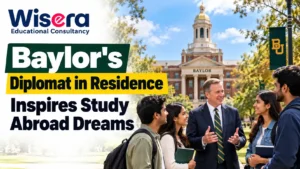





Baylor's Diplomat in Residence Inspires Study Abroad Dreams
For students dreaming of a career that spans continents, few experiences compare to sitting across from someone who has actually lived that life. Baylor University’s new diplomat in residence program is giving students exactly that opportunity, offering candid, life-changing conversations about diplomacy, global service, and the realities of working across borders. The initiative is quickly becoming one of the most talked-about additions to the university’s international affairs offerings.
As reported by the Baylor Lariat, the program is designed to bring the lived experience of foreign service professionals directly into the classroom and into informal mentorship settings, helping students see what a career “beyond borders” can actually look like.
WISERA COUNSELLING DESK
Not sure which university matches your NEET score?
Get a free comparison call on NMC-approved options within your budget.
What Is a Diplomat in Residence?
A diplomat in residence is typically a retired or active foreign service officer stationed at a university to mentor students, teach courses, and advise on international career paths. These programs are often run in partnership with national foreign service institutes and placed strategically at universities to widen the pipeline of students interested in global careers.
At Baylor, this means students now have direct access to someone who has negotiated treaties, managed embassies, and navigated complex cross-cultural situations firsthand. That kind of mentorship is rare at the undergraduate level, and it is already reshaping how students think about their futures.
Why These Conversations Matter for Students
Classroom theory about international relations only goes so far. Real conversations with someone who has lived the diplomatic life add context that textbooks simply cannot provide. Students report walking away from these sessions with a clearer sense of:
- How foreign service careers actually unfold day to day
- The skills needed to thrive in cross-cultural environments
- How to translate a liberal arts or business degree into global opportunities
- The realities of long-term postings abroad, including challenges and rewards
- Pathways into government service, NGOs, and international business
This kind of mentorship bridges the gap between academic interest and practical career planning, something many study abroad advisors say is critical for students considering international paths.
A Growing Trend: Universities Embracing Global Mentorship
Baylor’s diplomat in residence program isn’t happening in isolation. It reflects a broader shift among universities to deepen their global engagement offerings. The same reporting that highlighted this initiative also noted Baylor’s business school launching new week-long study abroad experiences, part of a wider “Revivalry week” push to energize international programming on campus.
This trend mirrors what’s happening at institutions worldwide, where short-term immersive programs, international mentorship, and cross-cultural exchange are increasingly seen as essential parts of a competitive education. Students who engage with these resources tend to graduate with stronger global awareness and a clearer sense of direction for careers that cross borders.
How Students Can Make the Most of These Opportunities
For students eager to benefit from programs like Baylor’s diplomat in residence initiative, a few strategies can help maximize the experience:
- Prepare thoughtful questions before meeting with visiting diplomats or mentors
- Attend related campus events, such as study abroad info sessions or international career panels
- Research foreign service exams and entry pathways early in your academic career
- Seek out short-term study abroad programs to test interest in international living before committing to a long-term path
- Connect mentorship insights to coursework, especially in political science, international business, or language studies
Students exploring structured study abroad options as a next step can also look into platforms like Wisera, which help connect learners with international programs, application guidance, and resources tailored to students aiming for global careers.
Looking Ahead
Baylor’s diplomat in residence program is a strong example of how universities can turn abstract interest in global careers into tangible, mentorship-driven pathways. As more schools adopt similar initiatives, students stand to gain richer access to real-world insight long before they step onto an international assignment themselves.
For anyone considering a future in diplomacy, international business, or global service, conversations like these aren’t just inspiring — they’re often the first real step toward a life that truly goes beyond borders.
Frequently Asked Questions
Is MBBS without NEET actually possible for Indian students?
Admission without NEET is possible at some foreign universities, but NEET-UG qualification is still mandatory for the Eligibility Certificate Indian students need, and for later registration in India.
Can I skip NEET if I plan to practise only outside India?
Technically, yes, since NMC registration wouldn’t apply. In practice, most students later prefer keeping the option to work in India open, which requires NEET qualification from the start.
Does a WDOMS listing mean a university is NMC-approved?
No. WDOMS confirms the school is a recognised medical institution globally. NMC compliance is a separate check covering duration, language, and internship rules.
Is FMGE still required in 2026, or has NExT replaced it?
FMGE is still the active licensing exam. NExT’s rollout has been delayed again under the NMC’s latest draft regulations, with no confirmed implementation date.
How long does the full process take, from admission to Indian licence?
Typically six years or more: a 54-month-plus course with internship abroad, followed by FMGE preparation and clearance after returning to India.
What’s the safest first step before shortlisting a university?
Get your NEET-UG status and Eligibility Certificate confirmed, then verify any shortlisted university on WDOMS before discussing fees.
Comments are closed