

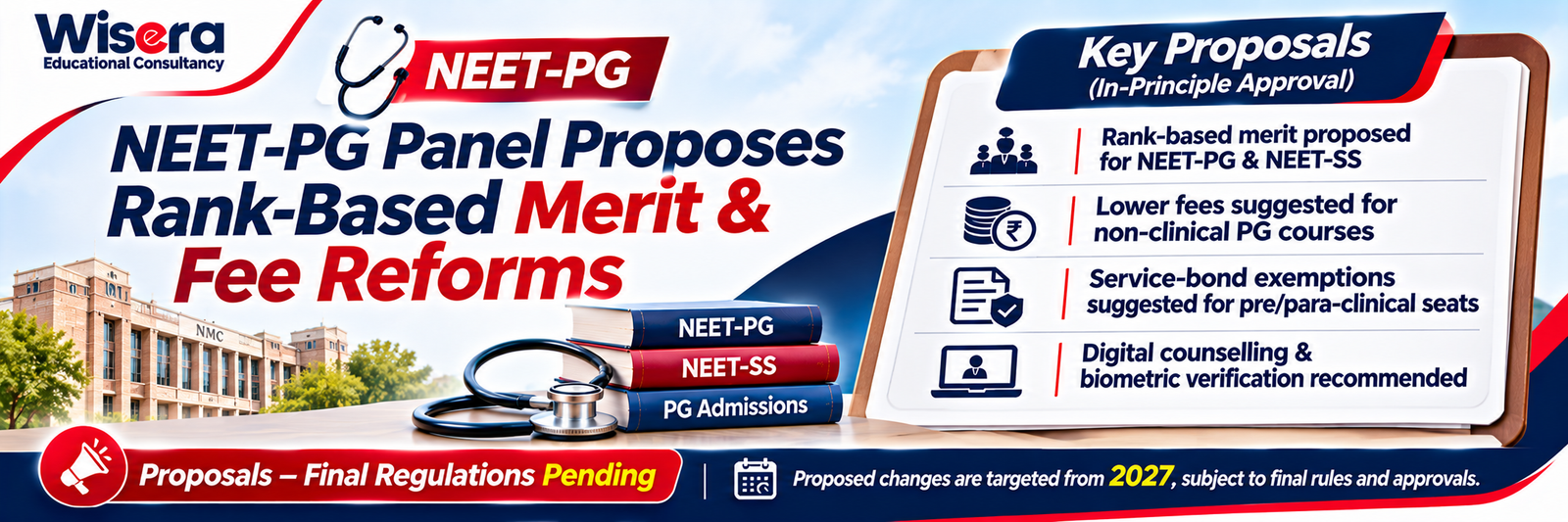
NEET-PG Panel Proposes Rank-Based Merit & Fee Reforms
The NEET-PG panel recommendations have brought fresh attention to how postgraduate medical admissions are conducted in India. A high-level committee has suggested sweeping reforms, including a rank-based merit system and rationalisation of fees across medical colleges. These proposals come at a time when NEET-PG, the postgraduate counterpart of NEET-UG, continues to witness massive participation, with 2,65,980 candidates competing for just 63,177 seats this year.
The panel’s recommendations aim to bring greater transparency and fairness to the postgraduate admission process, which has long been criticized for inconsistencies in fee structures and merit evaluation across states and institutions.
WISERA COUNSELLING DESK
Not sure which university matches your NEET score?
Get a free comparison call on NMC-approved options within your budget.
What Is NEET-PG and Why It Matters
NEET-PG, officially known as the National Eligibility cum Entrance Test for Postgraduate courses, is the single entrance examination for admission to MD, MS, and PG diploma courses in medical colleges across India. Unlike NEET-UG, which is for undergraduate MBBS and BDS admissions, NEET-PG is exclusively for doctors seeking specialization after completing their MBBS degree.
Given the limited number of postgraduate seats compared to the number of aspirants, NEET-PG is one of the most competitive examinations in the country. The latest cycle saw over 2.65 lakh candidates vying for just over 63,000 seats, highlighting the intense pressure on India’s medical education system.
Key Recommendations from the Panel
The committee has put forward several significant changes designed to overhaul the current system. Some of the most notable proposals include:
- Implementation of a rank-based merit system instead of the current percentile-based approach, ensuring clearer differentiation among candidates.
- Fee rationalisation across private and deemed medical colleges to reduce disparity in tuition costs for PG courses.
- Greater transparency in seat allocation and counselling processes at both state and national levels.
- Standardization of eligibility criteria across different quotas and categories.
- Periodic review mechanisms to ensure the system adapts to changing educational and healthcare needs.
These changes, if implemented, could significantly reshape how aspiring specialists are selected and how much they pay for their education, addressing long-standing concerns from students and parents alike.
Why Rank-Based Merit Could Change the Game
Currently, NEET-PG uses a percentile-based scoring system, which some experts argue can obscure the actual competitive standing of candidates, especially when scores are closely clustered. A rank-based system would provide a more straightforward and transparent way to evaluate candidates, making it easier for students to understand where they stand relative to their peers.
This shift could also simplify the counselling process, as colleges and students would have a clearer picture of merit positions when seats are allotted. However, the transition will require careful planning to ensure fairness, especially for candidates from reserved categories and those applying through state quotas.
Addressing the Fee Disparity Issue
One of the most welcomed aspects of the panel’s recommendations is the focus on fee rationalisation. Postgraduate medical education, particularly in private and deemed universities, often comes with exorbitant fees that can run into tens of lakhs of rupees annually. This has created a significant barrier for meritorious students who cannot afford such high costs despite securing good ranks.
By proposing a standardized fee structure, the panel hopes to make PG medical education more accessible and equitable, regardless of whether a student is studying at a government or private institution. This could be a crucial step toward reducing the financial burden on medical aspirants and their families.
What This Means for Future NEET-PG Aspirants
For students currently preparing for NEET-PG or planning to appear in future cycles, these proposed reforms signal a potential shift in how they should strategize their preparation and application process. Staying updated with official notifications from the National Board of Examinations and the Ministry of Health and Family Welfare will be essential as these recommendations move toward implementation.
Aspirants should also consider the following as these reforms unfold:
- Monitor official announcements regarding changes to the scoring and ranking methodology.
- Stay informed about updated fee structures at colleges of interest before applying.
- Review eligibility criteria carefully, especially if standardization across quotas is implemented.
- Seek guidance from reliable educational platforms like Wisera for updated NEET preparation resources and counselling support.
Conclusion
The proposed NEET-PG panel recommendations mark a significant step toward reforming postgraduate medical admissions in India. With a focus on rank-based merit and fee rationalisation, these changes aim to create a more transparent, fair, and accessible system for thousands of aspiring medical specialists. As the proposals move through the approval process, candidates and institutions alike should stay informed to adapt effectively to the evolving landscape.
Frequently Asked Questions
What is the main purpose of the NEET-PG panel recommendations?
The recommendations aim to introduce a rank-based merit system and rationalise fees across medical colleges to make PG admissions fairer and more transparent.
How is NEET-PG different from NEET-UG?
NEET-UG is for admission to undergraduate MBBS and BDS courses, while NEET-PG is for doctors seeking postgraduate specialization after completing their MBBS degree.
Will the rank-based system replace the current percentile system?
According to the panel’s proposal, yes—a rank-based merit system is suggested to replace the existing percentile-based scoring for greater clarity.
How many candidates appeared for NEET-PG this year?
A total of 2,65,980 candidates appeared for NEET-PG to compete for 63,177 available postgraduate medical seats.
When will these NEET-PG reforms be implemented?
As of now, these are recommendations from the panel. Official implementation timelines will depend on approvals from relevant regulatory and government bodies.











Comments are closed