

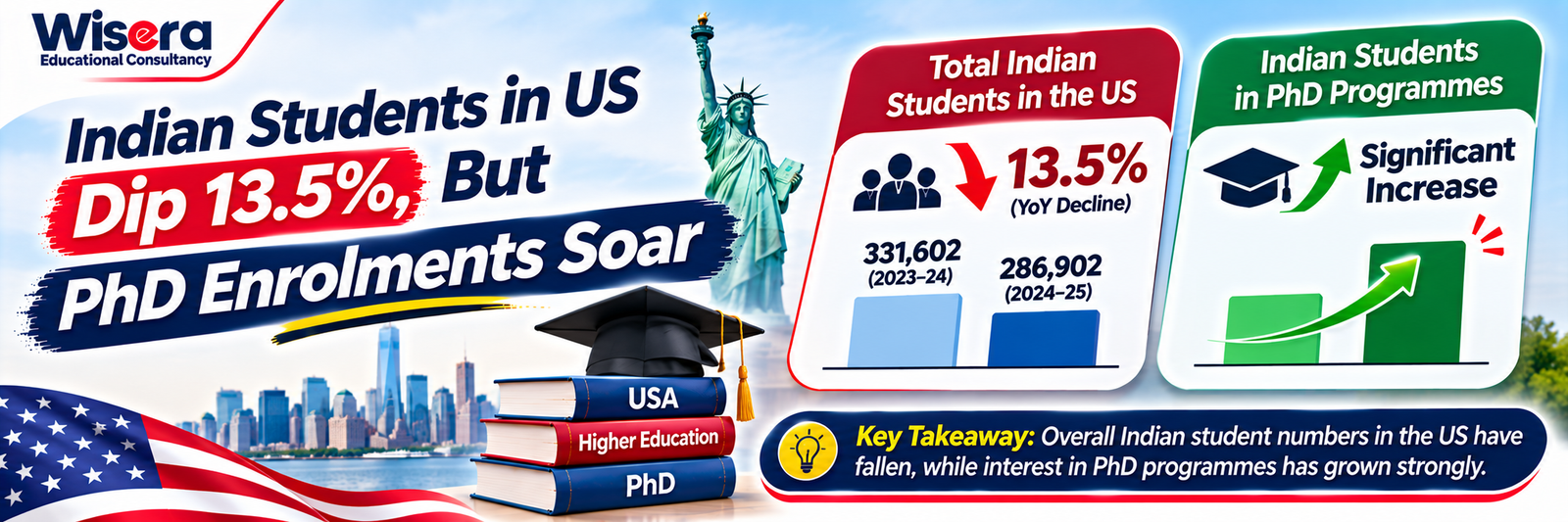
Indian Students in US Dip 13.5%, But PhD Enrolments Soar
The latest enrolment data has sent ripples across the study abroad community: Indian students in US dip 13.5% overall, even as doctoral enrolments have surged by an impressive 45.9%. This divergence highlights a significant shift in how Indian students are approaching higher education in America, moving away from short-term master’s programs toward long-term research-based degrees. Master’s enrolments alone dropped by 20.1%, pulling down the overall numbers despite the strong growth in PhD admissions.
For decades, the United States has remained a top destination for Indian students seeking quality education, career opportunities, and global exposure. But this latest data suggests that the landscape is evolving, with students and families reassessing their priorities amid changing economic, visa, and immigration conditions.
WISERA COUNSELLING DESK
Not Sure Which University Fits Your Profile?
Get a free consultation to find the right course, university, and country for you.
Why Are Indian Students in US Dip 13.5% Overall?
Several interconnected factors appear to be driving this decline in overall Indian student enrolment in the US:
- Rising cost of education: Tuition fees and living expenses in the US continue to climb, making master’s programs increasingly unaffordable for many middle-class Indian families.
- Visa uncertainties: Stricter visa scrutiny and unpredictable processing timelines have made students wary of committing to shorter programs with uncertain post-study work outcomes.
- Shifting job market: A tightening US job market for international graduates, especially in tech and STEM fields, has reduced the perceived return on investment for a one or two-year master’s degree.
- Emergence of alternative destinations: Countries like Canada, Germany, Ireland, and the UK have become more attractive due to relatively lower costs and clearer post-study work pathways.
These factors collectively explain why master’s programs, which once formed the bulk of Indian enrolments, have seen a sharp 20.1% decline.
The Surprising Rise in PhD Enrolments
While the overall numbers paint a cautious picture, the 45.9% jump in PhD enrolments tells a very different story. Indian students are increasingly viewing doctoral programs as a more secure and value-driven pathway to studying in the US.
Here’s why PhD programs are gaining traction:
- Funded opportunities: Most PhD programs in the US come with stipends, tuition waivers, and research assistantships, significantly reducing the financial burden on students.
- Long-term visa stability: Doctoral students typically enjoy longer visa validity and more predictable immigration status compared to master’s students.
- Career and research value: A PhD from a reputed US institution carries strong academic and professional credibility, especially for students aiming for research, academia, or specialized industry roles.
- Reduced dependency on job market timing: Since PhD programs span four to six years, students are less affected by short-term fluctuations in the job market compared to master’s graduates seeking immediate employment.
This shift suggests that Indian students are becoming more strategic, prioritizing financial security and long-term outcomes over quicker, more expensive degrees.
What This Means for Future Applicants
For students currently planning their study abroad journey, this trend offers valuable insight. Those with strong academic records and research interests may find PhD programs a more sustainable path to studying in the US, thanks to funding support and better visa predictability.
However, this doesn’t mean master’s programs are no longer viable. Students should carefully evaluate program rankings, scholarship availability, and post-study work policies before making a decision. Platforms like Wisera can help students compare universities, understand funding options, and make informed decisions based on their academic and financial goals.
Should Indian Students Reconsider Their US Study Plans?
Not necessarily. The data doesn’t indicate a declining interest in American education overall — rather, it reflects a recalibration of priorities. Students are now weighing cost, risk, and return on investment more carefully than before.
For some, this may mean exploring PhD routes even if originally planning a master’s degree. For others, it could mean looking at alternative countries offering similar quality education with lower financial and immigration risk.
Conclusion
The trend of Indian students in US dip 13.5% overall, paired with a sharp rise in PhD enrolments, signals a clear shift in strategy rather than a decline in ambition. As costs rise and visa policies tighten, Indian students are increasingly choosing pathways that offer financial support and long-term stability. Staying informed and planning strategically will be key for students navigating this evolving landscape.
Frequently Asked Questions
Why did Indian student enrolment in the US drop by 13.5%?
The decline is largely due to a 20.1% drop in master’s program enrolments, driven by rising costs, visa uncertainties, and a tougher US job market for international graduates.
Why are PhD enrolments among Indian students increasing?
PhD programs often come with funding, stipends, and tuition waivers, making them more financially sustainable and offering better long-term visa stability.
Is studying for a master’s degree in the US still worth it?
It depends on the program, university reputation, and job prospects in the chosen field. Students should research funding options and employment outcomes before deciding.
Are Indian students choosing other countries over the US?
Yes, destinations like Canada, Germany, Ireland, and the UK are gaining popularity due to lower costs and clearer post-study work opportunities.
How can students decide between a master’s and a PhD program?
Students should consider their career goals, financial situation, and interest in research. PhDs suit those pursuing academia or specialized research roles, while master’s degrees suit quicker entry into the job market.











Comments are closed