

Uzbekistan MBBS Admissions for Indians Drop to Just 200
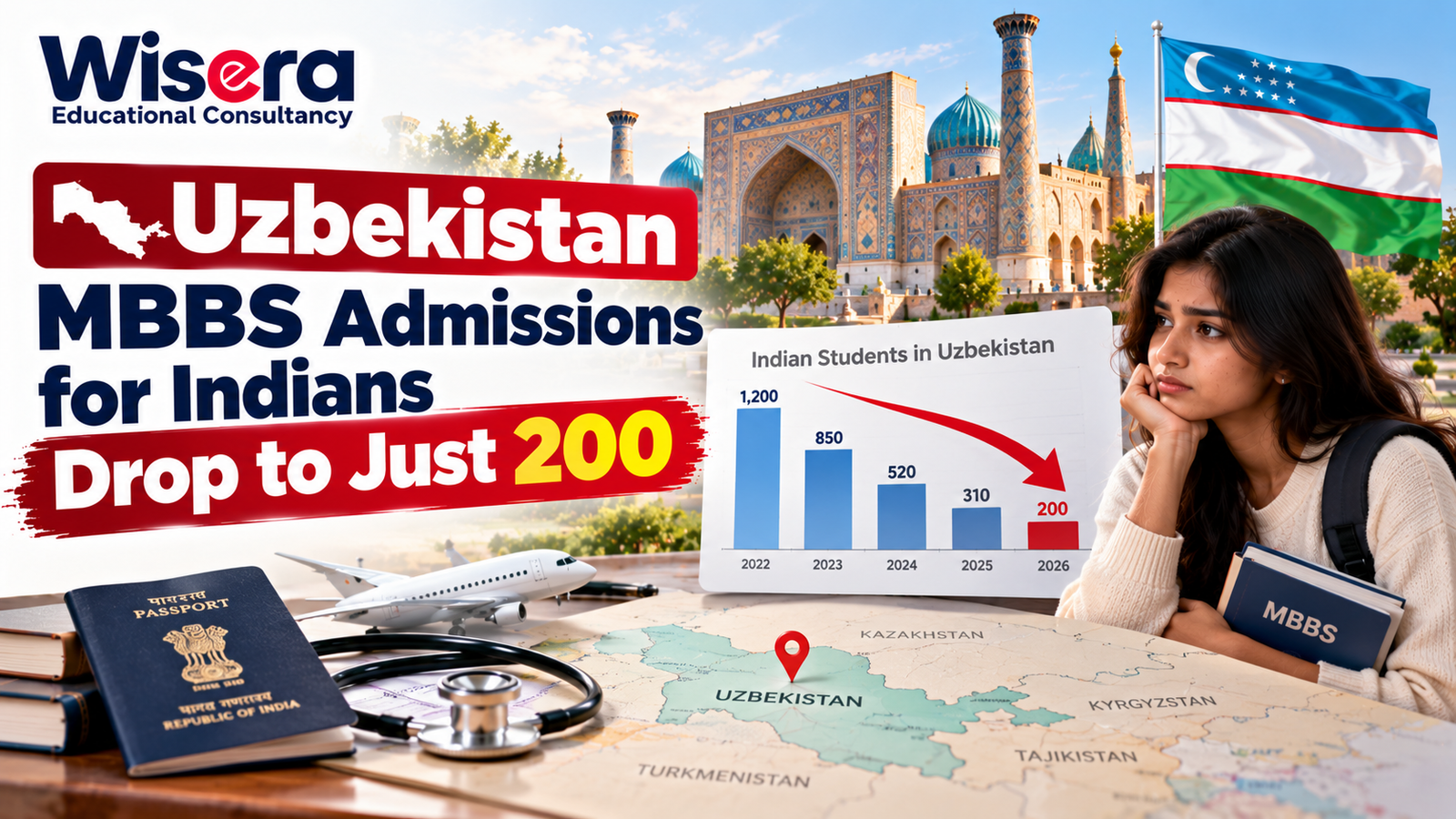
Once hailed as a budget-friendly gateway to a medical career, Uzbekistan is now witnessing a sharp decline in Uzbekistan MBBS admissions among Indian students. According to a recent report by The Pioneer, the number of Indian students enrolling in Uzbek medical universities has dropped drastically to just 200, down from thousands in previous years. This sudden fall has raised concerns among aspiring doctors and their families who once viewed Uzbekistan as a reliable and affordable destination for MBBS education.
The decline is being attributed to a mix of regulatory uncertainty, policy changes, and growing apprehension about the recognition and quality of medical degrees obtained from Uzbekistan. For thousands of Indian students who dream of becoming doctors, this development signals the need for a more cautious and informed approach when choosing a study-abroad destination.
WISERA COUNSELLING DESK
Not sure which university matches your NEET score?
Get a free comparison call on NMC-approved options within your budget.
Why Uzbekistan MBBS Admissions Are Falling
For years, Uzbekistan attracted Indian students due to its relatively low tuition fees, simplified admission process, and proximity to India. However, several factors have contributed to the current downturn:
- Regulatory Turmoil: Frequent changes in Uzbekistan’s medical education policies have created confusion among students and agents alike.
- Quality Concerns: Questions have been raised about the clinical exposure and infrastructure available at some universities.
- Recognition Issues: Uncertainty around the recognition of Uzbek medical degrees by India’s National Medical Commission (NMC) has discouraged new applicants.
- FMGE Pass Rates: Historically low pass percentages in India’s Foreign Medical Graduate Examination (FMGE) for Uzbekistan-returned students have further dented confidence.
- Safety and Visa Hurdles: Reports of inconsistent visa processing and administrative hurdles have added to the hesitation.
Impact on Indian Students and Families
The sharp fall in admissions is more than just a statistic—it reflects a growing trust deficit. Families who previously considered Uzbekistan a safe and economical option are now reconsidering their choices. Education consultants report a noticeable shift in student preference toward countries with more stable regulatory frameworks and better global recognition of medical degrees.
This shift is prompting many students to explore more credible alternatives for pursuing medical education overseas. Platforms like Wisera are increasingly being used by students to compare universities, verify accreditation, and make informed decisions before committing to a country or institution.
What This Means for Future MBBS Aspirants
The current situation in Uzbekistan serves as a cautionary tale for students planning to study medicine abroad. Before enrolling in any foreign medical university, students should prioritize due diligence over cost savings alone.
Here are a few key steps aspiring MBBS students should take:
- Verify the university’s accreditation with recognized global and national medical bodies.
- Check the institution’s historical FMGE/NEXT pass percentage for Indian students.
- Research the country’s current regulatory stability regarding foreign medical education.
- Consult verified platforms or educational advisors instead of relying solely on local agents.
- Evaluate clinical training facilities and faculty-to-student ratios.
Alternatives to Consider Amid Uzbekistan’s Decline
With Uzbekistan’s reputation facing a setback, many Indian students are now turning to countries like Russia, Georgia, Kyrgyzstan, and the Philippines, which offer more established regulatory frameworks and better long-term recognition prospects. Comparing these destinations based on curriculum standards, cost, and post-graduation licensing requirements has become essential for making a sound decision.
It’s also advisable to consult updated resources and expert guidance before finalizing any international medical admission, as policies can change rapidly, as seen in Uzbekistan’s case.
Conclusion
The dramatic drop in Uzbekistan MBBS admissions highlights the volatility that can affect even once-popular study destinations. For Indian students aspiring to become doctors, this serves as an important reminder to prioritize transparency, accreditation, and long-term career viability over short-term affordability. Careful research and expert consultation can help students avoid similar pitfalls in the future.
Frequently Asked Questions (FAQs)
Why have Uzbekistan MBBS admissions for Indian students declined so sharply?
The drop is mainly due to regulatory instability, concerns over degree recognition, and inconsistent quality standards in Uzbek medical universities.
Is an MBBS degree from Uzbekistan still valid in India?
Recognition depends on current NMC guidelines and the specific university’s accreditation status, which students must verify before enrolling.
What is the FMGE, and why does it matter for Uzbekistan MBBS graduates?
The FMGE is a licensing exam required for Indian students who study medicine abroad. Low pass rates among Uzbekistan graduates have raised quality concerns.
Which countries are better alternatives to Uzbekistan for MBBS now?
Countries like Russia, Georgia, Kyrgyzstan, and the Philippines are increasingly preferred due to more stable regulations and recognized curricula.
How can students verify a foreign medical university before applying?
Students should check accreditation, FMGE pass rates, and consult trusted platforms or educational advisors for verified information.
Comments are closed