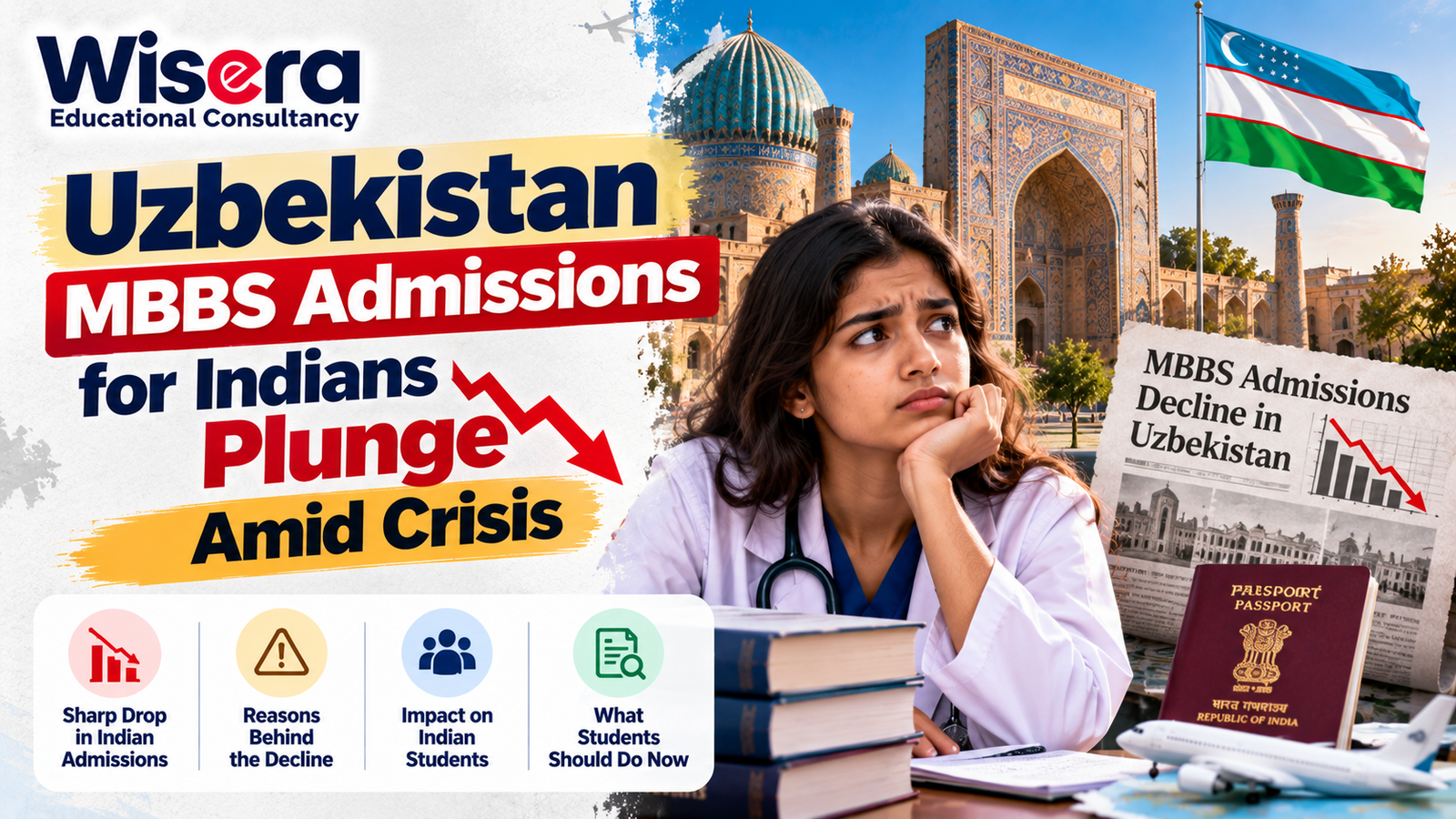




Uzbekistan MBBS Admissions for Indians Plunge Amid Crisis
The landscape of studying medicine overseas is shifting dramatically, and Uzbekistan MBBS admissions are at the center of this upheaval. Once a go-to destination for thousands of Indian students chasing affordable medical degrees, Uzbekistan has seen admissions crash to a mere 200 students this year, according to a report by The Pioneer, Chandigarh. This sharp decline signals a deeper regulatory crisis that every aspiring medical student and parent should understand before making study-abroad decisions.
What’s Behind the Uzbekistan MBBS Admissions Crisis?
For years, Uzbekistan attracted Indian students with its low tuition fees, relatively easy admission process, and proximity to India. Cities like Tashkent, Samarkand, and Bukhara hosted thousands of Indian medical aspirants annually. However, the sector has now hit a wall due to mounting regulatory concerns.
Several factors have contributed to this downturn:
- Stricter screening and licensing requirements imposed by Indian and Uzbek authorities
- Concerns over the quality of medical education and clinical exposure at certain universities
- Increased scrutiny following poor performance of returning graduates in India’s Foreign Medical Graduate Examination (FMGE)
- Allegations of mismanagement and inconsistent accreditation standards at some institutions
- Growing uncertainty around recognition of Uzbek medical degrees by Indian regulatory bodies
These issues combined have made students and parents far more cautious, leading to the steep drop from thousands of enrollments to just 200 this admission cycle.
WISERA COUNSELLING DESK
Not sure which university matches your NEET score?
Get a free comparison call on NMC-approved options within your budget.
Impact on Indian Students Already Enrolled
The regulatory turmoil doesn’t just affect new admissions—it creates significant anxiety for students currently studying in Uzbekistan. Many are worried about:
- Whether their degrees will be recognized by the National Medical Commission (NMC) upon completion
- Possible changes in curriculum or clinical training requirements mid-course
- Difficulty in transferring to other recognized universities if their current institution loses accreditation
- Reduced value of their degree in the competitive FMGE and practice landscape back home
This uncertainty is prompting many families to reconsider Uzbekistan altogether, pushing them to explore other MBBS-abroad destinations with more stable regulatory frameworks.
Why Due Diligence Matters More Than Ever
This crisis is a strong reminder that choosing a medical university abroad requires far more than comparing tuition fees. Students must verify a university’s accreditation status, clinical training infrastructure, and most importantly, whether its degree is recognized by India’s NMC.
Before finalizing any decision, prospective students should:
- Check the university’s inclusion in the NMC’s approved list of foreign medical institutions
- Research the historical FMGE pass rates of graduates from that specific university
- Evaluate the quality of hospitals and clinical rotations affiliated with the institution
- Consult updated government advisories regarding the country’s medical education sector
- Seek guidance from experienced education consultants who track regulatory changes closely
Platforms like Wisera can help students navigate these complexities by offering updated, verified information on MBBS admissions across multiple countries, helping families make informed, future-proof decisions.
Alternative Destinations Gaining Popularity
As Uzbekistan’s reputation takes a hit, many Indian students are now turning to other established destinations for affordable and recognized medical education. Countries like Georgia, Russia, Kyrgyzstan, and the Philippines continue to attract steady interest due to their relatively stable regulatory environments and established track records with Indian students.
However, experts caution that every destination comes with its own set of considerations, and students should not simply shift from one uncertain option to another without proper research.
Conclusion
The sharp decline in Uzbekistan MBBS admissions highlights a critical lesson for Indian medical aspirants: affordability alone cannot be the deciding factor when choosing where to study medicine. Regulatory stability, degree recognition, and quality of education must take precedence. As the situation in Uzbekistan continues to unfold, students are strongly advised to stay updated, verify credentials thoroughly, and seek expert counsel before committing to any university abroad.
Frequently Asked Questions (FAQs)
Why have Uzbekistan MBBS admissions dropped so sharply?
The decline is primarily due to regulatory concerns, stricter accreditation scrutiny, and doubts over degree recognition by Indian authorities, compounded by poor FMGE pass rates among returning graduates.
Is it still safe for Indian students to pursue MBBS in Uzbekistan?
While some universities remain reputable, students must verify current NMC approval status and accreditation before enrolling, given the ongoing regulatory uncertainty.
Will degrees from Uzbek universities still be recognized by India’s NMC?
This depends on the specific university’s current accreditation status. Students should check the latest NMC-approved list before applying.
What should current students in Uzbekistan do amid this turmoil?
They should stay informed through official university and NMC communications, maintain strong academic performance, and consult education experts if considering a transfer.
Which countries are better alternatives for MBBS abroad right now?
Georgia, Russia, Kyrgyzstan, and the Philippines are currently considered more stable alternatives, though thorough research is essential for any destination chosen.
Comments are closed