




Ireland English-Language Requirements for Indian Students
For India’s growing community of aspiring international students, Ireland has emerged as a top destination thanks to its world-class universities, post-study work opportunities, and welcoming culture. However, before packing their bags, students must clearly understand the Ireland English-language requirements set by Irish universities and immigration authorities. Meeting these benchmarks is a critical step in securing admission and a student visa, and many applicants from India are often unaware of the nuances involved until late in the process.
Studying abroad gives students access to new academic experiences, specialised skills, and global exposure — but only if they meet the foundational language criteria first. Let’s break down what Indian students need to know.
WISERA COUNSELLING DESK
Not Sure Which University Fits Your Profile?
Get a free consultation to find the right course, university, and country for you.
Why English-Language Proficiency Matters for Ireland
Ireland is an English-speaking country, and all university instruction is conducted in English. Since most Indian students come from regional educational backgrounds, demonstrating English proficiency becomes a mandatory part of both the admission and visa process.
Irish universities and the Irish Naturalisation and Immigration Service (INIS) require proof of language competency to ensure students can:
- Follow academic lectures and coursework effectively
- Communicate confidently in daily life and part-time work environments
- Complete assignments, research papers, and presentations independently
- Integrate smoothly into a multicultural campus environment
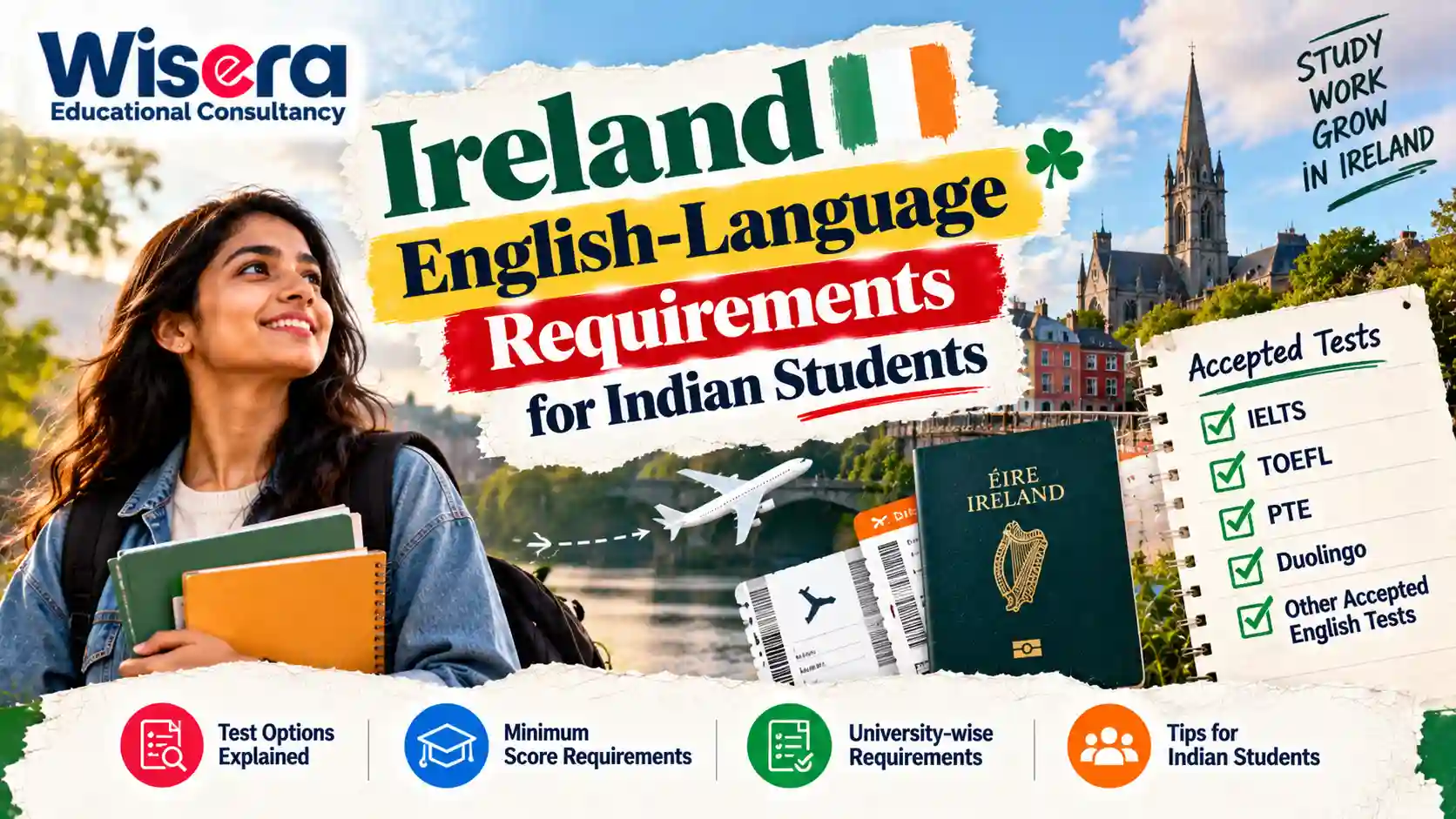
Accepted English Proficiency Tests
Most Irish institutions accept standardized international English tests. Indian students should familiarise themselves with the common options:
- IELTS (International English Language Testing System): The most widely accepted test, with most universities requiring a minimum overall band score of 6.0 to 6.5, and some competitive programs requiring 7.0 or higher.
- TOEFL iBT: Accepted by many Irish universities, typically with scores ranging from 80 to 100 depending on the course level.
- PTE Academic: Increasingly accepted, especially for postgraduate programs.
- Duolingo English Test: Some universities have started accepting this as a flexible, remote-friendly alternative.
Students should always check specific score requirements on their chosen university’s official admissions page, as requirements can vary by course, faculty, and degree level.
Exemptions and Alternative Pathways
Not every student needs to sit for a formal English test. Several Irish universities offer exemptions under specific conditions, including for students who:
- Completed their previous education (secondary or undergraduate) entirely in English medium
- Hold prior qualifications from English-speaking countries
- Pass an internal English assessment conducted by the university
Indian students coming from CBSE, ICSE, or English-medium state board backgrounds should inquire directly with their target universities, as this could save significant time and test preparation costs.
Preparing for English Proficiency Tests
Since English-language scores directly impact both admission and visa approval, preparation should begin early. Here are some practical tips for Indian students:
- Start preparation at least 3-4 months before application deadlines
- Use official practice materials from IELTS or TOEFL websites
- Join structured coaching programs or online courses focused on academic English
- Practice speaking English regularly to build fluency and confidence
- Take mock tests to identify weak areas in reading, writing, listening, and speaking
Students planning their study abroad journey can also consult guidance platforms like Wisera for personalised support on test preparation, university shortlisting, and visa documentation tailored to Indian applicants.
Visa Implications of English-Language Requirements
Beyond university admission, the Irish student visa process also considers English proficiency. Immigration officers may assess a student’s language ability as part of the overall application to ensure they can sustain themselves academically and socially during their stay. Missing or weak language scores can lead to visa delays or rejections, making it essential to treat this requirement with the same seriousness as academic qualifications.
Final Thoughts
For Indian students dreaming of studying in Ireland, understanding and meeting the Ireland English-language requirements is a non-negotiable first step. From choosing the right test to exploring exemption options, early planning can make the entire admission and visa process significantly smoother. With the right preparation and guidance, India’s talented students can confidently take their place among Ireland’s thriving international student community.
Frequently Asked Questions
What is the minimum IELTS score required for Ireland?
Most undergraduate programs require a minimum IELTS score of 6.0, while postgraduate and competitive courses may require 6.5 to 7.0.
Can Indian students get an English-language exemption for Irish universities?
Yes, students who completed prior education in English medium may qualify for exemptions, depending on university policy.
Is TOEFL accepted by Irish universities?
Yes, TOEFL iBT is widely accepted, though specific score requirements vary by institution and program.
How early should I start preparing for English proficiency tests?
It's recommended to start preparation at least 3-4 months before your application deadline.
Does the Irish student visa also require English proficiency proof?
Yes, immigration authorities may review English proficiency as part of the overall visa application to ensure academic and social readiness.
Comments are closed