

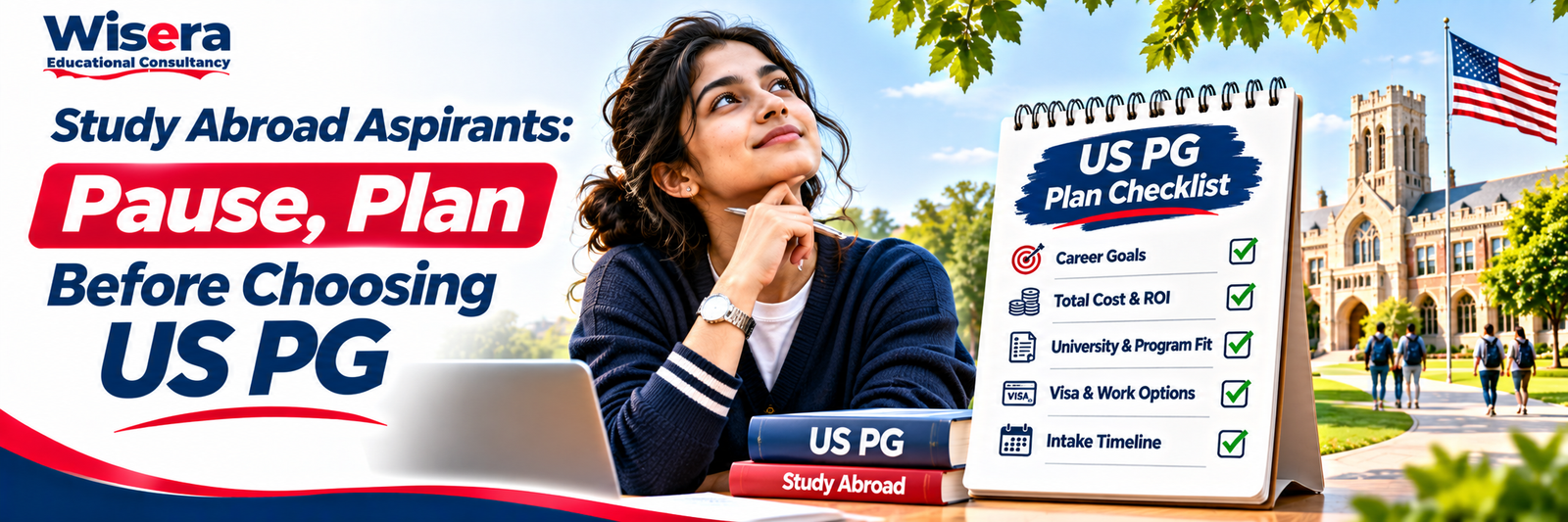
Study Abroad Aspirants: Pause, Plan Before Choosing US PG
Every year, thousands of Indian engineering graduates dream of pursuing a postgraduate degree in the United States. But recent conversations among students highlight a growing sense of caution. Study abroad aspirants are increasingly being urged to pause, think, and plan carefully before committing to a US master’s program, rather than rushing into decisions driven purely by peer pressure or perceived prestige.
Several engineering students who shared the real priorities shaping their decisions today — scholarships, visa uncertainty, campus safety, and the all-important question of post-study employment. These concerns reflect a shift from blind enthusiasm to informed, calculated planning.
Why Students Are Rethinking the US Dream
For years, the United States has been the top choice for Indian students pursuing engineering and technology postgraduate degrees. However, rising tuition costs, tightening visa regulations, and an unpredictable job market have made students more cautious.
Many students interviewed emphasized that admission to a university is no longer the only factor. They now weigh the entire journey — from financing the degree to securing a job after graduation — before making a final decision.
WISERA COUNSELLING DESK
Not Sure Which University Fits Your Profile?
Get a free consultation to find the right course, university, and country for you.
Scholarships: The First Big Question
With the cost of a US master’s degree often crossing $40,000-$60,000 annually, scholarships and financial aid have become central to the decision-making process. Students are prioritizing universities that offer:
- Merit-based scholarships for international applicants
- Graduate assistantship or research assistantship opportunities
- Reduced tuition for teaching assistant roles
- Partial fee waivers based on academic performance
Without adequate financial support, many aspirants are now exploring alternative destinations or deferring their plans until they secure stronger funding options.
Visa Rules and Policy Uncertainty
Visa regulations remain one of the most unpredictable aspects of studying in the US. Frequent policy changes around H-1B sponsorship, OPT (Optional Practical Training) extensions, and student visa interviews have added a layer of anxiety for aspiring students.
Students are now actively researching:
- Current F-1 visa approval trends
- STEM OPT extension eligibility for their chosen course
- Changes in H-1B lottery policies
- University-specific visa support services
This cautious approach shows that students are no longer treating the US as a guaranteed pathway to long-term settlement, but rather as one option among many that must be evaluated with a long-term employment strategy in mind.
Safety Concerns Are Now a Priority
Campus and city safety have emerged as significant factors influencing university selection. Parents and students alike are researching crime rates, campus security measures, and the overall safety reputation of cities before shortlisting universities.
This trend marks a notable shift — safety was rarely a dealbreaker a decade ago, but today it ranks alongside academic reputation and affordability as a key decision criterion.
Post-Study Jobs: The Real Deciding Factor
Ultimately, most students agree that the value of a US degree lies in post-study employment outcomes. Aspirants are now closely examining:
- University placement records and employer tie-ups
- Industry demand for their specific specialization
- Alumni networks in target job markets
- Average salary packages after graduation
Students are increasingly consulting study abroad planning resources to compare universities not just on rankings, but on real employability outcomes and return on investment.
Conclusion
The message from engineering students is clear: studying abroad is no longer a decision to be made in haste. Study abroad aspirants are encouraged to carefully evaluate scholarships, visa realities, safety, and job prospects before finalizing their plans. A well-researched, patient approach today can save significant financial and emotional stress tomorrow — and ultimately lead to a more rewarding international education experience.
Frequently Asked Questions
Why are study abroad aspirants becoming more cautious about the US?
Rising costs, visa unpredictability, and job market concerns are making students evaluate options more carefully before committing to US postgraduate programs.
What scholarships are available for Indian students in the US?
Options include merit-based scholarships, graduate assistantships, research assistantships, and partial tuition waivers offered by many universities.
How important are visa rules in choosing a study destination?
Very important. Changes in F-1 visa processing, OPT extensions, and H-1B policies directly affect long-term career plans, making visa research essential.
Does campus safety really affect university selection?
Yes, safety has become a top priority for students and parents, often influencing the final choice of city and university alongside academics and cost.
How can students evaluate post-study job prospects before applying?
Students should research placement records, industry demand, alumni outcomes, and average salaries for their specific program before applying.










Comments are closed