

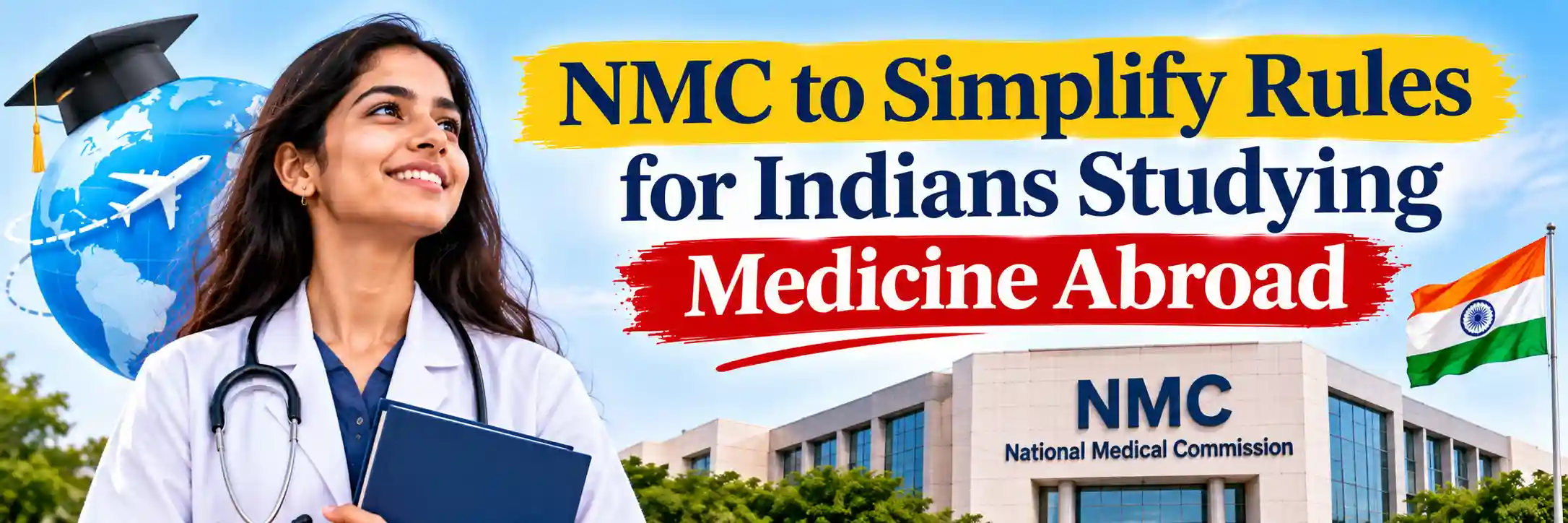
NMC to Simplify Rules for Indians Studying Medicine Abroad
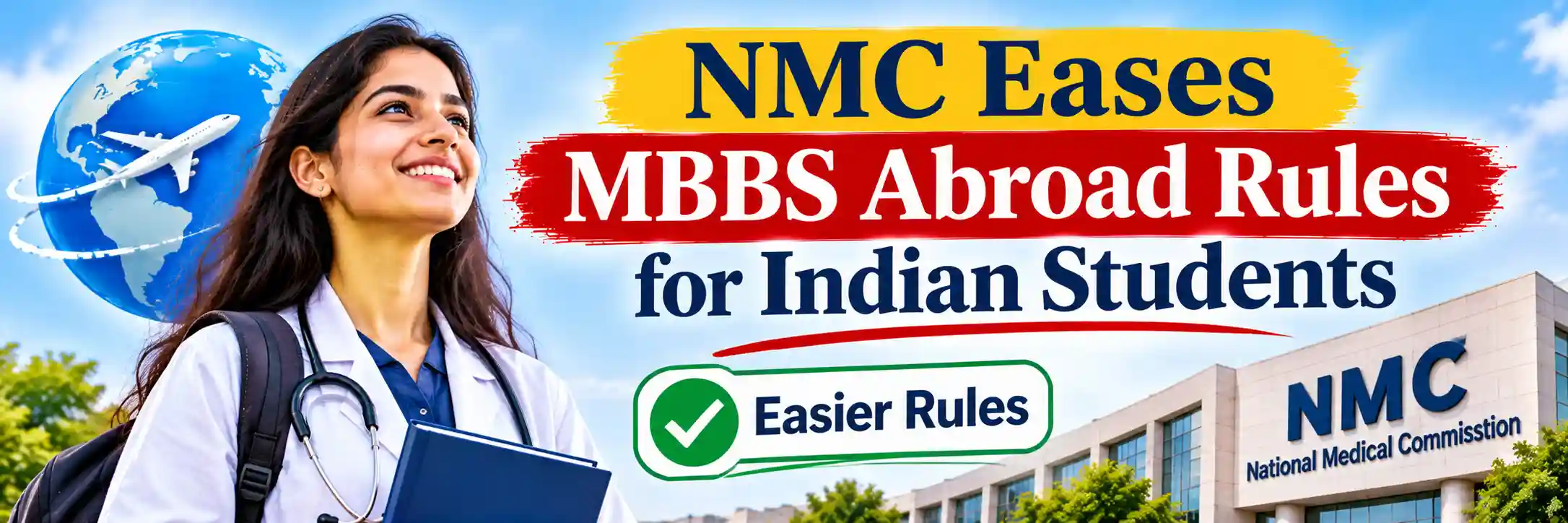
For years, thousands of Indian students who pursue MBBS and other medical degrees overseas have struggled with complex licensing requirements once they return home. That may soon change. The NMC rules for Indians studying medicine abroad are set to become simpler, offering much-needed relief to students who choose to study medicine in countries like Russia, Georgia, the Philippines, and China.
The National Medical Commission (NMC) is considering changes to the eligibility criteria that govern Indian students who complete their medical education abroad and wish to practice in India. This move comes after years of complaints regarding rigid regulations, delayed recognitions, and confusion over equivalency standards.
Why the NMC Is Rethinking Its Rules
Every year, a large number of Indian students opt to study medicine abroad due to limited MBBS seats in India and the high cost of private medical colleges. However, many of these students face hurdles when they return, particularly during the Foreign Medical Graduate Examination (FMGE) and the National Exit Test (NExT), which are mandatory to practice in India.
The NMC’s proposed changes aim to address long-standing concerns such as:
- Inconsistent recognition of medical degrees from different countries
- High failure rates in the FMGE/NExT screening tests
- Lack of clarity on internship requirements completed abroad
- Delays in processing eligibility certificates before departure
- Limited transparency in the equivalence of foreign curricula with Indian standards
WISERA COUNSELLING DESK
Not sure which university matches your NEET score?
Get a free comparison call on NMC-approved options within your budget.
What Changes Are Being Considered
While the final framework is still being finalized, early indications suggest the NMC may focus on streamlining documentation processes, clarifying internship norms, and potentially revising the structure of screening exams to make them more standardized and predictable for returning graduates.
This is particularly significant for students who often find themselves caught between two different educational systems — one abroad during their degree, and another back in India during licensing. A simplified rule structure could reduce the uncertainty that has long discouraged bright students from considering international medical education as a viable path.
What This Means for Aspiring Medical Students
For Indian families considering medical education overseas, this development could be a turning point. Historically, concerns over the FMGE pass rate and ambiguous NMC guidelines have made many parents hesitant to send their children abroad for MBBS, despite the affordability and quality education offered by several international universities.
With clearer and more consistent rules, students may feel more confident in pursuing medicine abroad without worrying about facing roadblocks upon their return. This is especially relevant for students planning to apply to universities in Eastern Europe, Central Asia, and Southeast Asia — regions that have become popular among Indian medical aspirants.
If you’re exploring international education options, including medicine or other professional courses, platforms like Wisera can help you compare universities, understand admission requirements, and plan your study abroad journey more effectively.
Key Takeaways for Students and Parents
- The NMC is reviewing eligibility norms for Indians who study medicine abroad
- Changes may simplify documentation, internship validation, and licensing exams
- The goal is to reduce confusion and inconsistency faced by returning graduates
- Students should still verify university accreditation before enrolling abroad
- Staying updated with official NMC notifications remains essential
Until the final guidelines are officially released, students are advised to continue following existing NMC requirements and consult verified sources before making admission decisions.
Conclusion
The proposed simplification of NMC rules for Indians studying medicine abroad signals a positive shift toward a more transparent and student-friendly system. While the exact details are still being worked out, this move could make international medical education a more accessible and stress-free option for thousands of aspiring doctors across India.
Frequently Asked Questions
What are the current NMC rules for Indians studying medicine abroad?
Currently, students must clear the FMGE or NExT exam and meet specific eligibility and internship requirements set by the NMC to practice medicine in India after completing a degree abroad.
Why is the NMC planning to simplify these rules?
The NMC aims to address inconsistencies in degree recognition, reduce confusion around eligibility, and make the licensing process smoother for returning medical graduates.
Will this change affect students currently studying medicine abroad?
It may, depending on when the new guidelines are implemented. Students should stay updated through official NMC communications for the latest requirements.
Which countries are popular among Indian students for studying medicine abroad?
Countries like Russia, Georgia, the Philippines, China, and Kyrgyzstan are commonly chosen due to affordable tuition and recognized medical programs.
How can students stay updated on the new NMC guidelines?
Students should regularly check the official NMC website and trusted news sources for updates, and consult study abroad counselors for guidance.





Comments are closed