

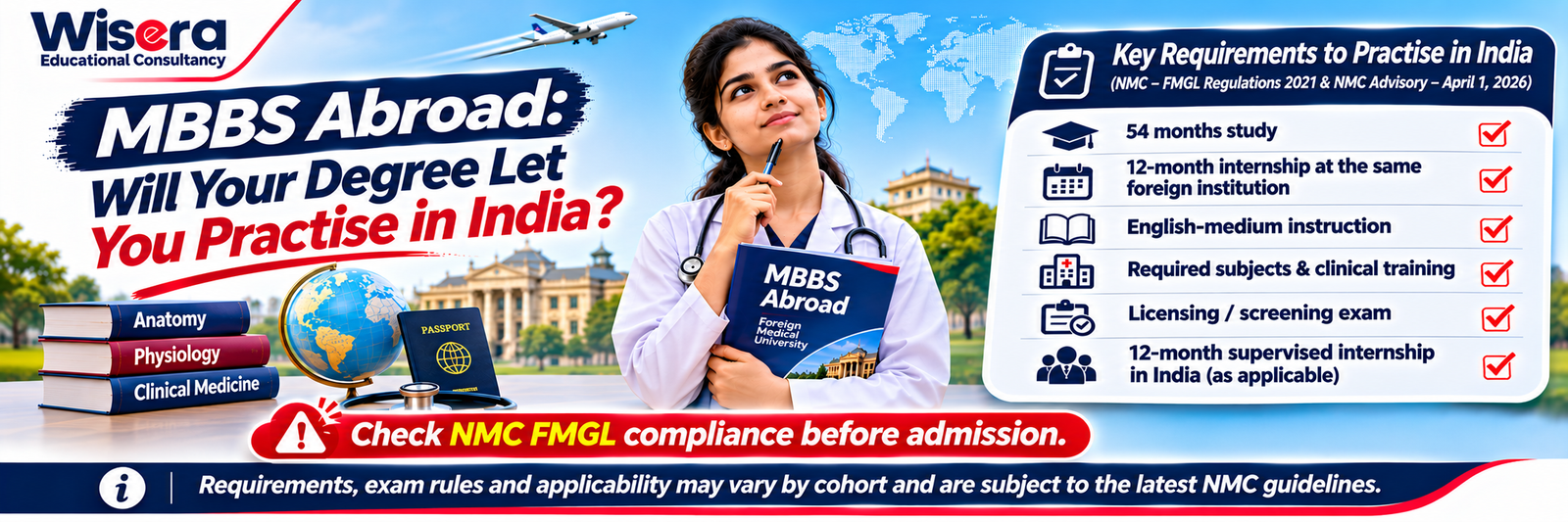
MBBS Abroad: Will Your Degree Let You Practise in India?
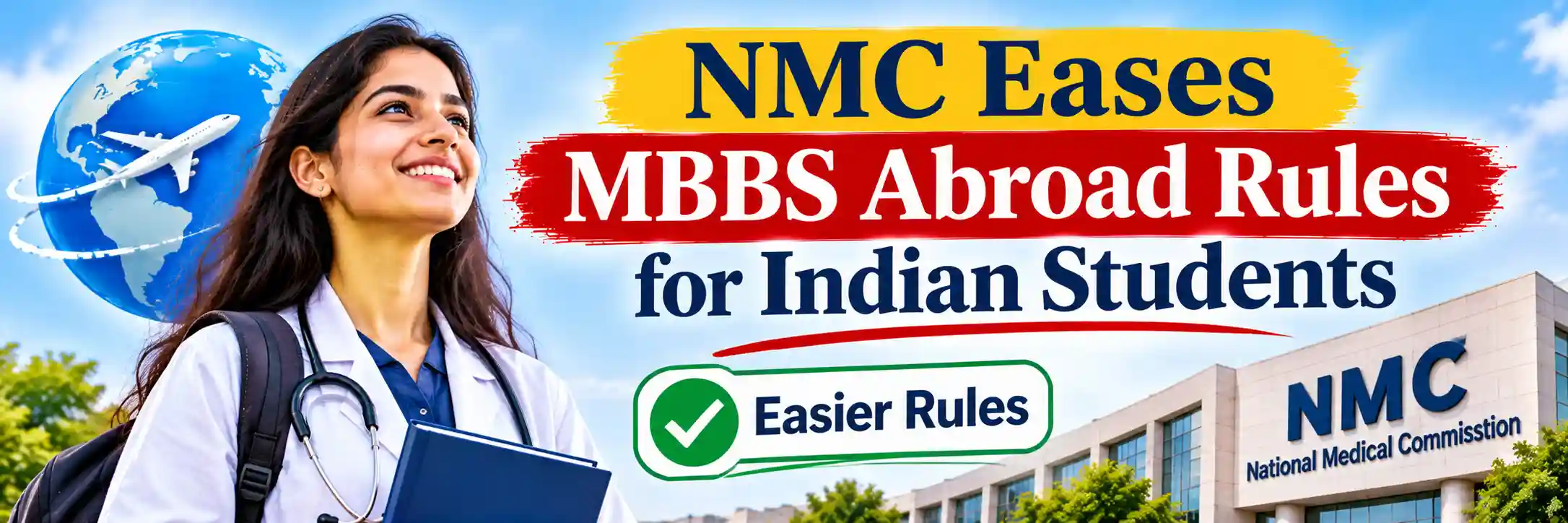
Thousands of Indian students choose to pursue MBBS abroad every year, drawn by lower fees, easier admission criteria, and the promise of a globally recognised medical degree. But a recent report has raised an important red flag: not every foreign medical degree guarantees the right to practise medicine back home in India. Before you sign up for a university overseas, it’s crucial to understand the regulatory maze that determines whether your hard-earned degree will actually be valid in India.
Several factors — including campus location, quality of clinical training, and local licensing requirements — can determine whether a student is left stranded without a valid license after years of study and lakhs of rupees spent.
WISERA COUNSELLING DESK
Not sure which university matches your NEET score?
Get a free comparison call on NMC-approved options within your budget.
Why MBBS Abroad Attracts So Many Indian Students
The appeal of studying MBBS abroad is easy to understand. Many countries in Eastern Europe, Central Asia, and parts of Southeast Asia offer:
- Significantly lower tuition fees compared to private medical colleges in India
- No capitation fees or donations
- Simpler admission processes without the intense competition of NEET counselling for Indian seats
- English-medium instruction at many universities
- Globally recognised degrees from NMC– and WHO-listed institutions
However, the same flexibility that makes admissions easier abroad can also mean inconsistent academic standards, limited hands-on clinical exposure, and campuses that don’t resemble the hospital-based training expected by Indian regulators.
The Hidden Risk: Campus Location and Clinical Exposure
One of the biggest concerns highlighted in recent reports is the gap between where students attend classes and where actual clinical training happens. Some universities operate satellite campuses far from teaching hospitals, limiting students’ exposure to real patients, wards, and emergency settings.
This matters enormously because the National Medical Commission (NMC) requires that foreign medical graduates demonstrate adequate clinical competency through the Foreign Medical Graduate Examination (FMGE) before they can practise in India. A degree earned with minimal bedside training can make clearing this exam — and transitioning into Indian hospital practice — significantly harder.
Understanding FMGE and Local Licensing Rules
Every Indian student who completes an MBBS abroad must clear the FMGE (also known as the Foreign Medical Graduate Licentiate Exam) to register as a doctor in India. This is a mandatory screening test, regardless of how prestigious the foreign university is.
Key points students must verify before enrolling abroad include:
- Whether the university is officially recognised by India’s National Medical Commission
- Whether the course duration and curriculum meet NMC’s minimum standards (including internship requirements)
- Whether the university provides sufficient hospital-based clinical rotations
- The historical FMGE pass rate of graduates from that specific university
- Any country-specific licensing exams required to practise locally, in case the student wants to stay abroad instead
Skipping this due diligence is one of the most common reasons Indian students return home only to discover their degree needs additional bridging coursework — or in worse cases, isn’t accepted for FMGE registration at all.
How to Choose the Right University for MBBS Abroad
Instead of relying solely on agents or marketing brochures, students and parents should independently verify a university’s credentials. Some practical steps include:
- Cross-checking the university against the NMC’s official list of approved foreign medical institutions
- Visiting the campus (virtually or in person) to assess hospital tie-ups and lab facilities
- Speaking with alumni about their FMGE experience and clinical training quality
- Reviewing the total cost of study, including hidden fees, hostel charges, and travel
- Consulting trusted education platforms like Wisera for guidance on verified universities and country-specific requirements
Choosing a university with strong hospital affiliations and a track record of successful FMGE candidates is far more important than simply picking the cheapest option available.
What Students Should Do Before Enrolling
Before committing to any foreign medical program, students should create a checklist to avoid future regulatory setbacks. This includes:
- Confirming NMC recognition status for the current academic year
- Reviewing the syllabus for alignment with Indian medical education standards
- Understanding visa, residency, and safety conditions in the host country
- Budgeting for FMGE coaching and preparation after returning to India
- Seeking counselling from education consultants who specialise in MBBS abroad admissions rather than generic study-abroad agents
Conclusion
Pursuing an MBBS abroad can be a rewarding and cost-effective path to becoming a doctor, but only if students approach the decision with eyes wide open. Campus location, clinical training quality, and strict compliance with NMC and FMGE requirements can make the difference between a fulfilling medical career in India and years of wasted effort. Careful research, verified university choices, and informed planning are the best safeguards against ending up with a degree that doesn’t let you practise where you intended to all along.
Frequently Asked Questions
Is MBBS abroad valid in India?
Yes, provided the university is recognised by the National Medical Commission and the graduate clears the FMGE screening test.
What is FMGE and why is it important?
FMGE (Foreign Medical Graduate Examination) is a mandatory licensing exam for Indian students who complete their MBBS abroad. Passing it is required to register as a practising doctor in India.
How do I check if a foreign medical university is NMC-approved?
Students can check the official NMC website’s list of approved foreign medical institutions before applying.
Does campus location really affect my medical career?
Yes. Universities located far from affiliated teaching hospitals often provide weaker clinical exposure, which can affect your readiness for FMGE and real-world practice.
Is it cheaper to study MBBS abroad than in India?
In many cases, yes — tuition and living costs abroad can be considerably lower than private medical colleges in India, though total costs vary by country and university.






Comments are closed