

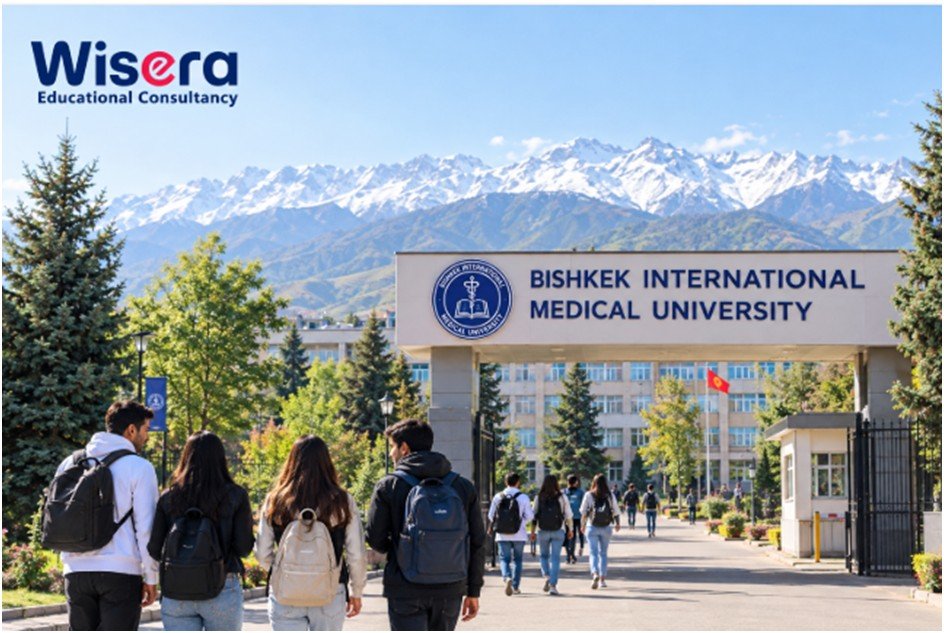
MBBS in Kyrgyzstan: What Indian Students Should Know Before Applying
MBBS in Kyrgyzstan looks simple on paper: a lower tuition range, a student-friendly capital and a long, structured programme. In 2026, the better question is not “which university costs least?” but “which university is on firm ground today?” Kyrgyzstan’s state accreditation review has reshaped the picture, and NMC rules decide whether your degree can lead to a licence in India. This guide shows what to verify before you pay a single rupee.
Is MBBS in Kyrgyzstan Still a Safe Choice for Indian Students in 2026?
It can be, but only at universities that clear both Kyrgyz accreditation and NMC’s rules. In 2026, Kyrgyzstan put its medical institutions through a state accreditation review. Medical Dialogues reported in September that 13 institutes reportedly failed, and the Embassy of India in Bishkek has issued advisories that group institutions by accreditation status. Some institutions were accredited for a shorter term than others. This is why a university’s name, or a consultant’s word, is no longer enough. Read the Embassy’s latest advisory, then ask the university for written confirmation of its current status. Wisera’s MBBS in Kyrgyzstan page lists the universities its counsellors work with, and every shortlist should be checked against the latest advisory before you apply.
How Do You Compare Medical Universities in Kyrgyzstan for Indian Students?
Compare them on five points: accreditation status, curriculum, teaching hospitals, academic support and written fee terms. Brochures rarely show these side by side, so ask every university for the same set of documents and compare the answers. Vague replies tell you something too. The table below turns this into a quick checklist you can reuse for each shortlisted university.
What to check | What to ask for | Why it matters |
State accreditation | Current status and term, in writing | Decides whether a university can admit students and issue state-standard documents |
Curriculum | Year-wise subject list and exam pattern | Shows if teaching covers what NMC expects |
Teaching hospitals | Hospital names and rotation schedule | Shows where clinical learning really happens |
Academic support | Faculty ratio, mentoring, retake rules | Affects how students cope in the early years |
Fees | Full fee schedule and refund terms | Prevents surprises after admission |
Browse the pages for I.K. Akhunbaev Kyrgyz State Medical Academy, Kyrgyz-Russian Slavic University, Osh State University Medical Faculty and International University of Kyrgyzstan to see how each describes its programme. Then verify the same points with the university directly.
What Does Clinical Training in Kyrgyzstan Medical Universities Really Involve?
Clinical training means supervised work with real patients in teaching hospitals, usually after the basic science years. Its quality depends on which hospitals the university uses, how early rotations begin, and how closely teachers supervise. Ask for these details by programme, not as a general promise. Students who plan to return to India should also keep proof of in-person attendance, because NMC’s March 2026 notices on online-study compensation show that regulators look for that proof. Use these questions as your starting point:
- Which hospitals are affiliated, and does the university name them itself?
- In which semester do patient-facing rotations begin?
- How many students share one clinical group at a time?
- Are bedside teachers university faculty or visiting doctors?
- Do simulation labs come before real patient practice?
- Is the internship completed at the same institution?
Written answers to these questions are worth more than any campus photograph.

How Can You Check NMC Rules for MBBS in Kyrgyzstan Before Applying?
Start with NMC’s Foreign Medical Graduate Licentiate Regulations, 2021, and read the latest public notices on NMC’s official website. NMC does not publish a list of approved foreign universities, so the word “approved” on a brochure settles nothing. What counts is whether the programme meets the conditions in the regulations. For students admitted after the rules took effect on 18 November 2021, those conditions include:
- A foreign medical course of at least 54 months
- A 12-month internship at the same foreign institution
- English as the medium of instruction
- Eligibility to practise in the country where the degree is earned
- The full course and training completed at one institution abroad
- A further 12-month supervised internship in India, plus the licensing test applicable to your batch
NEET qualification is also required for Indian students. Because notices change, and NMC revised its online-study guidance twice in March 2026, always check the date on anything you read.
Will You Need Russian or Kyrgyz for Lectures, Exams and Patients?
Not always for lectures, but often for patients. Many universities offer English-medium programmes, yet most patients in local hospitals speak Kyrgyz or Russian. Ask each university to state the language of lectures, the language of exams and the language used on hospital wards. Some programmes include Russian language classes in the early years, which can make clinical years far easier. A student who can greet, question and reassure a patient learns more from every rotation. Confirm these points:
- Is the full programme taught in English from Year 1?
- Are written and oral exams conducted in English?
- Is Russian or Kyrgyz taught as a subject?
- Do bilingual faculty or interpreters support students on wards?
What Should You Prepare for Student Life in Kyrgyzstan?
Prepare for a continental climate, hostel living and a new culture. Winters are cold, summers are warm, and daily life runs largely in Russian and Kyrgyz. Embassy advisories also recommend that students travel on a student visa only and register with the Embassy of India in Bishkek after arrival. Ask for hostel details in writing: room sharing, heating, food arrangements and distance from campus. A small budget buffer for winter clothing and travel home helps too.
Frequently Asked Questions
Q1: Is MBBS in Kyrgyzstan valid in India?
It can lead to registration in India only if the student, university and programme meet NMC's FMGL rules and the student clears the required licensing test. Check current rules on NMC's website before admission.
Q2: Is NEET required for MBBS in Kyrgyzstan?
Yes. Indian students need NEET qualification under current NMC requirements.
Q3: How long is MBBS in Kyrgyzstan?
NMC requires at least 54 months of study plus a 12-month internship at the same institution. Programme length varies, so ask for the total duration in writing.
Q4: Which Kyrgyz universities are accredited right now?
Status changed in 2026. Check the latest Embassy of India, Bishkek advisory and ask the university for written confirmation.
Q5: Is MBBS in Kyrgyzstan taught in English?
Many universities offer English-medium programmes, but patient interaction often involves Russian or Kyrgyz. Confirm the language policy for lectures, exams and wards.
Your Next Step Before Choosing a Medical University in Kyrgyzstan
A good choice is one that holds up when you check it: accreditation, clinical training, NMC rules, and language. Speak with Wisera’s counsellors to understand university-specific requirements before making your decision. Book a free counselling session and bring your shortlist.





Comments are closed