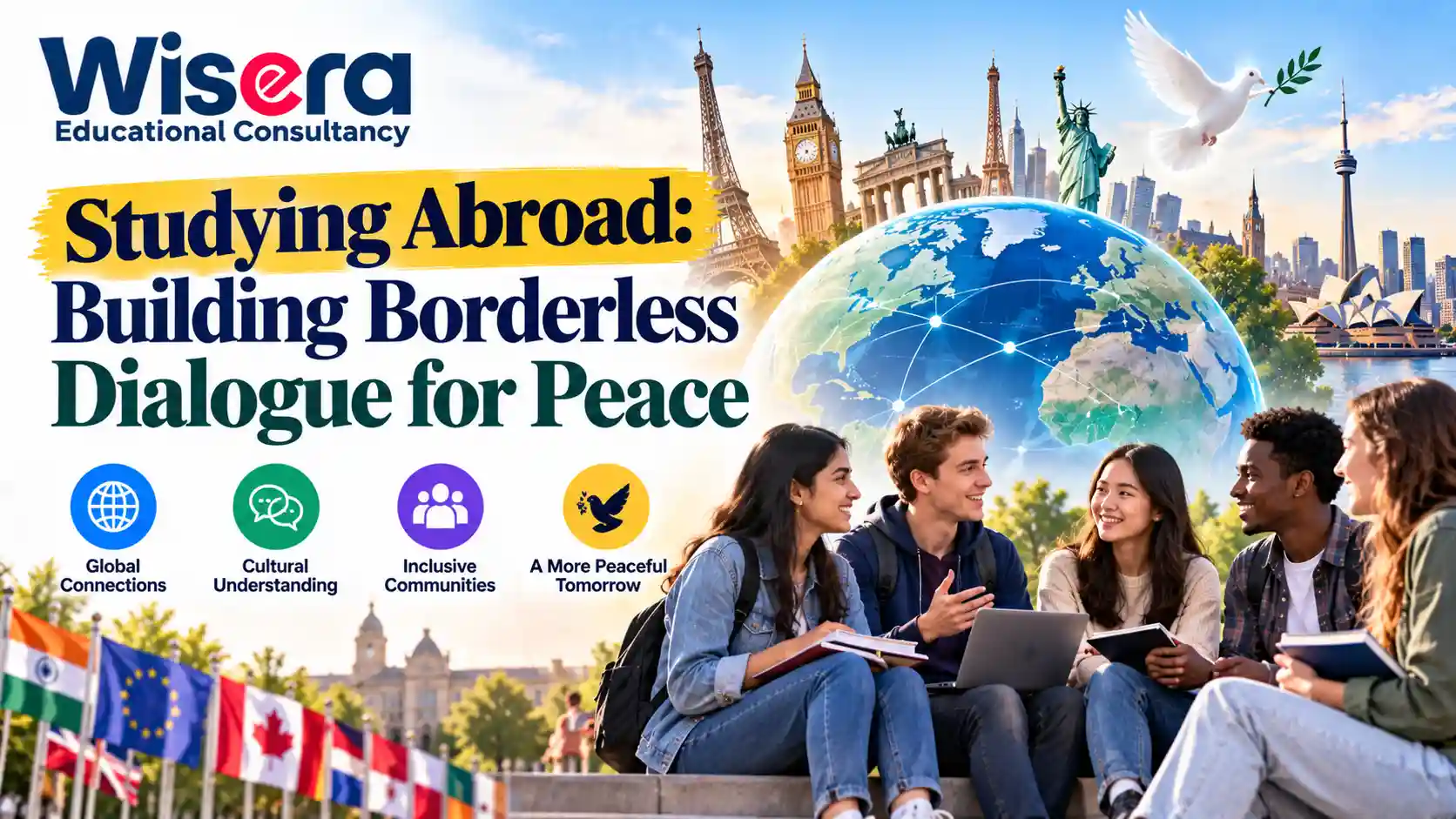





Studying Abroad: Building Borderless Dialogue for Peace
Studying abroad is often described as a life-changing experience, but for many students it becomes something more profound: a bridge between cultures and a path toward global understanding. A recent reflection published by Japan Forward captures this idea beautifully. A student who studied in the United States shared how a single classroom discussion on global challenges revealed just how differently people from various backgrounds perceive the same issues—and how that gap can be the very starting point for meaningful dialogue.
This story is a powerful reminder of why international education matters today more than ever. In a world facing political divides, cultural misunderstandings, and conflicting worldviews, studying abroad offers students a rare opportunity to sit across the table from people who think differently—and to listen.
WISERA COUNSELLING DESK
Not sure which university matches your NEET score?
Get a free comparison call on NMC-approved options within your budget.
Why Studying Abroad Encourages Borderless Thinking
When students leave their home countries to study, they are forced out of their comfort zones. Classroom discussions are no longer limited to one national perspective. Instead, students encounter classmates from dozens of countries, each bringing their own historical, political, and social context to the conversation.
This exposure does more than broaden knowledge—it reshapes how students approach disagreement. Instead of viewing differing opinions as obstacles, students begin to see them as opportunities for deeper understanding. This shift in mindset is exactly what the Japan Forward reflection highlights: dialogue becomes the foundation for peacebuilding, not just classroom debate.
The Classroom as a Microcosm of the World
International classrooms often mirror the complexities of global politics. A discussion on climate change, trade, or security can look completely different depending on who is speaking. Students from conflict-affected regions may view global challenges through a lens of survival, while students from stable democracies may focus on policy and innovation.
These contrasting viewpoints are not meant to create division. Instead, they teach students a critical skill: empathetic listening. By understanding where others are coming from, students develop the patience and open-mindedness necessary for international cooperation.
Key Benefits of Studying Abroad for Global Dialogue
Beyond academic growth, studying abroad nurtures several soft skills essential for today’s interconnected world. These include:
- Improved cross-cultural communication and sensitivity
- Greater tolerance for ambiguity and differing viewpoints
- Stronger critical thinking through exposure to diverse arguments
- Enhanced adaptability in unfamiliar social and academic environments
- Long-term professional networks spanning multiple countries
These benefits extend far beyond the classroom. Employers increasingly value graduates who have studied abroad because they bring adaptability and a global mindset—qualities essential in multinational teams and international business environments.
Turning Dialogue Into Action
The real impact of studying abroad lies in what students do with their new perspectives. Many return home with a renewed commitment to bridging cultural gaps, whether through diplomacy, business, education, or grassroots community work. Others continue engaging in international forums, student exchange programs, or global advocacy groups.
For students planning their own study abroad journey, platforms like Wisera can help identify programs and universities that emphasize diverse, globally engaged classrooms—environments where borderless dialogue naturally thrives.
How Students Can Prepare for Meaningful Global Conversations
Not every student arrives abroad ready to engage in deep cross-cultural dialogue. It takes preparation and an open mind. Some practical steps include:
- Researching the host country’s culture, history, and current events beforehand
- Practicing active listening rather than immediately forming counterarguments
- Joining multicultural clubs or international student associations
- Participating in group projects with classmates from different countries
- Reflecting regularly on how personal biases shape interpretation of global issues
These habits help students make the most of their time abroad, transforming simple classroom discussions into lasting lessons in empathy and diplomacy.
Conclusion
Studying abroad is more than an academic pursuit—it is a powerful tool for building understanding across borders. As the Japan Forward reflection shows, even a single classroom conversation can reveal the vast differences in how people see the world, and more importantly, how dialogue can turn those differences into pathways for peace. For students willing to listen, learn, and engage, studying abroad offers not just a degree, but a deeper sense of global citizenship.
Frequently Asked Questions
What does "borderless dialogue" mean in the context of studying abroad?
It refers to open, respectful conversations between people from different countries and cultures, aimed at understanding diverse perspectives rather than debating who is right.
How does studying abroad help improve global understanding?
By placing students in multicultural classrooms, studying abroad exposes them to varied viewpoints on global issues, fostering empathy, patience, and critical thinking.
Can studying abroad really contribute to peacebuilding?
Yes. Many diplomats, educators, and global leaders credit their international education experiences with shaping their ability to mediate and understand conflicting perspectives.
What skills do students gain from international classroom discussions?
Students often develop stronger communication skills, cultural sensitivity, adaptability, and the ability to engage constructively with differing opinions.
How can students prepare for meaningful cross-cultural dialogue abroad?
Researching the host culture, practicing active listening, and engaging with international student groups are great ways to prepare for deeper global conversations.
Comments are closed