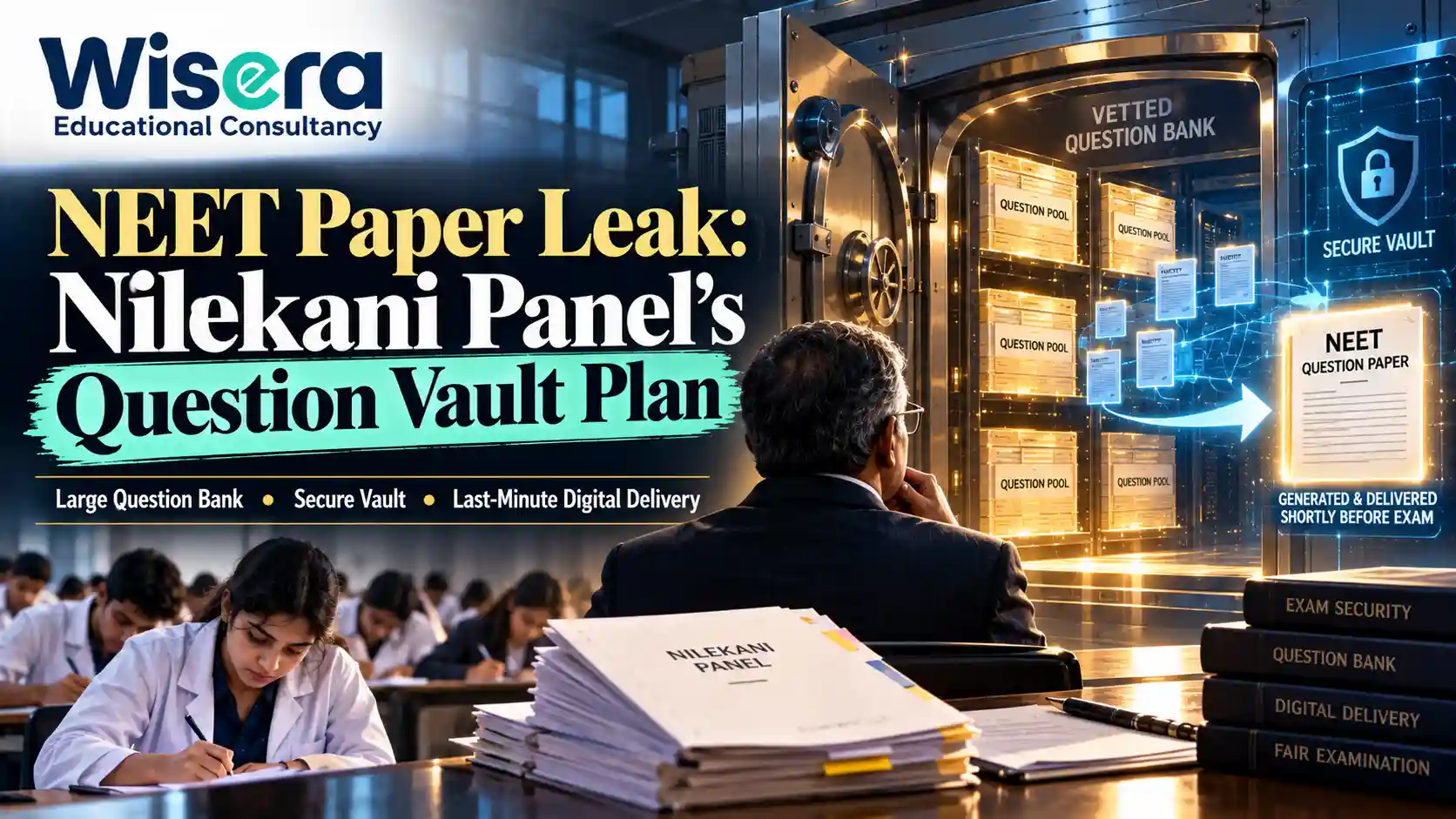





NEET Paper Leak: Nilekani Panel’s Question Vault Plan
The infamous NEET paper leak controversy of 2024 continues to drive major changes in India’s examination ecosystem. A high-level committee led by Infosys co-founder Nandan Nilekani is now exploring a “question vault” mechanism along with secure digital delivery systems to prevent future leaks and ensure the integrity of national-level exams like NEET-UG. The proposal was discussed at an event in Mumbai, where officials acknowledged that the recent NEET-UG leak exposed serious gaps in paper storage, transportation, and distribution at exam centres.
The panel is examining how a centralized, encrypted question vault could replace the current system of printing and physically transporting question papers to thousands of exam centres across the country. This comes after investigations revealed that paper leaks occurred during transit and at the local level, including incidents involving translators handling regional language versions of the NEET-UG paper.
WISERA COUNSELLING DESK
Not sure which university matches your NEET score?
Get a free comparison call on NMC-approved options within your budget.
What Is the Question Vault Mechanism?
The question vault concept refers to a secure, centralized digital repository where exam papers are stored in encrypted form until the exact moment they are released at test centres. Instead of printing and distributing physical papers weeks in advance, questions would be transmitted electronically and decrypted only within a tightly controlled window on exam day.
This approach significantly reduces the human touchpoints where leaks typically occur, such as:
- Printing press staff accessing papers before exam day
- Transport personnel handling physical question bundles
- Regional translators and coordinators who prepare language-specific versions
- Local exam centre staff who open sealed packets hours before the test
By minimizing these vulnerable stages, the Nilekani panel believes digital delivery can drastically cut down the risk of premature exposure.
Why the NEET-UG Paper Leak Triggered This Reform
The 2024 NEET-UG paper leak became one of the biggest scandals in India’s examination history, affecting the admission prospects of over 2 million aspirants. Investigations traced leaks to multiple states, with allegations pointing to organized rackets that obtained papers before the official exam time.
One particularly concerning revelation involved the handling of translated question papers. Since NEET-UG is conducted in multiple regional languages, translators often receive papers in advance to prepare localized versions. This additional step reportedly became a weak link exploited by bad actors during the recent leak.
Digital Delivery: A Broader Examination Reform
Beyond the question vault, the Nilekani panel is reportedly evaluating end-to-end digital delivery systems for large-scale examinations. This could include:
- Encrypted satellite or internet-based transmission of question papers directly to exam centres
- Biometric authentication for staff accessing exam content
- Real-time monitoring and audit trails for every stage of paper handling
- Standardized protocols for regional language translation done closer to exam time
Such reforms align with global best practices used in other high-stakes examination systems, where digital infrastructure has largely replaced vulnerable paper-based logistics.
What This Means for Future NEET Aspirants
For students preparing for NEET-UG, these reforms signal a renewed push toward transparency and fairness in the exam process. A secure question vault system, if implemented effectively, could restore trust among millions of medical aspirants who depend on a level playing field to secure seats in medical colleges.
Students and parents should stay updated on official announcements from the National Testing Agency (NTA) regarding any procedural changes for upcoming NEET cycles. For comprehensive exam preparation resources and updates on NEET-related developments, aspirants can explore guidance available at Wisera.
As India’s examination system moves toward greater digitization, the question vault mechanism could mark a turning point in preventing incidents like the recent NEET paper leak, ensuring a fairer and more secure testing environment for future aspirants.
Frequently Asked Questions
What is the question vault mechanism proposed by the Nilekani panel?
It is a secure, encrypted digital system for storing and transmitting exam question papers, reducing reliance on physical printing and transport to prevent leaks.
Why was this reform proposed after the NEET paper leak?
The 2024 NEET-UG paper leak exposed vulnerabilities in physical paper handling, prompting authorities to explore digital alternatives for better security.
Will the question vault system be used for NEET-UG exams only?
No, the reforms are being considered as part of broader examination security measures applicable to multiple national-level entrance exams.
How will digital delivery reduce the risk of future leaks?
By minimizing human touchpoints such as printing staff, transporters, and translators who currently access papers before the exam, digital delivery limits exposure windows.
When will these reforms be implemented for NEET-UG?
No official timeline has been confirmed yet, as the Nilekani panel is still in the evaluation and planning stage of these reforms.
Comments are closed